
GAAP Aligned Accounting: Practices for Reliable Reporting
Your financial statements are only as strong as the accounting foundation beneath them. GAAP aligned accounting ensures your numbers are consistent, credible, and ready for scrutiny-whether from lenders, investors, or auditors.
Small business owners often underestimate how much reliable reporting impacts growth and trust. This guide walks you through the core principles, proven practices, and common pitfalls that separate solid accounting from costly mistakes.
What GAAP Actually Means for Your Business
Your financial statements reflect the accounting foundation you build. Generally Accepted Accounting Principles sets out to standardize the classifications, assumptions and procedures used in accounting in industries across the US. The Financial Accounting Standards Board maintains these standards in the United States, and they exist for one critical reason: to ensure that financial statements are comparable and trustworthy across different companies and industries.
For small business owners, GAAP compliance isn’t about following arbitrary rules-it’s about building a financial reporting system that lenders, investors, and potential acquirers will actually trust. When your books follow GAAP standards, you speak the same financial language as every other credible business, which removes friction when you need capital or sell your company.
Which GAAP Standards Actually Matter
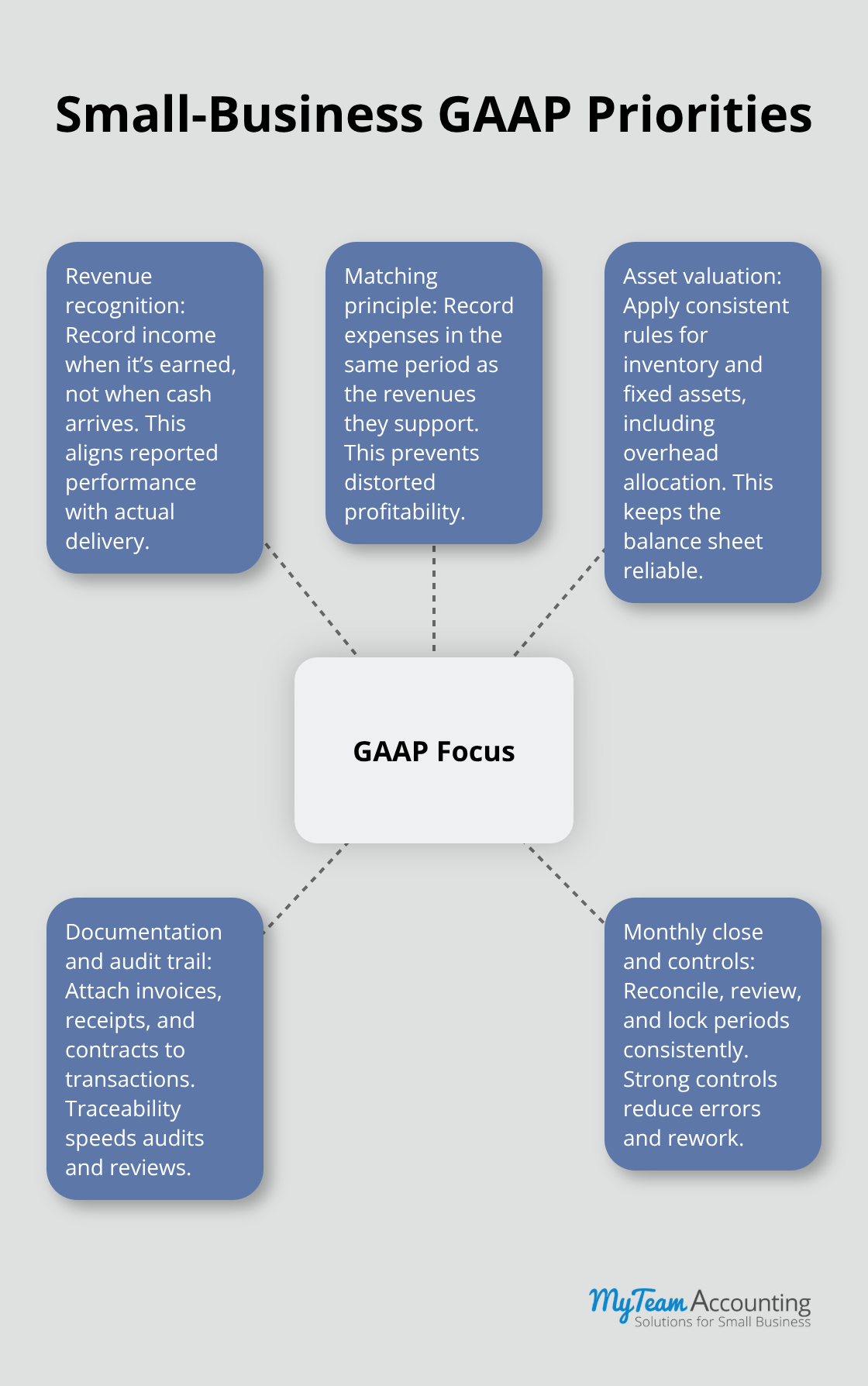
The most consequential GAAP standards for small businesses center on revenue recognition, expense classification, and the matching principle. Revenue recognition requires you to record income when you earn it, not necessarily when cash arrives, which creates a more accurate picture of business performance than cash-basis accounting. The matching principle demands that expenses must be recorded in the same period as the revenues they help generate, preventing you from distorting profitability through strategic timing of transactions.
Asset valuation standards dictate how you record inventory, equipment, and intangible assets on your balance sheet. Small manufacturers often struggle here because they must allocate overhead costs to inventory rather than expense them immediately, which significantly impacts reported profits. A qualified bookkeeper will ensure these standards are embedded into your chart of accounts and closing procedures from day one, preventing costly reclassifications later.
Why Compliance Creates Real Business Advantages
Businesses that maintain GAAP-aligned accounting gain immediate credibility when approaching banks for loans or lines of credit. Lenders request audited or reviewed financial statements precisely because they want GAAP compliance assurance, and a business that already maintains these standards accelerates the entire approval process. Additionally, GAAP compliance protects you during tax audits because your financial statements and tax returns reconcile cleanly-auditors expect to see explanations for differences, but when your accounting foundation is solid, those explanations are straightforward and defensible.
If you eventually sell your business, buyers conduct financial due diligence and immediately spot red flags when accounting practices deviate from GAAP. A business with three years of GAAP-aligned statements commands higher valuations and closes faster because buyers face less uncertainty about true profitability and financial position. This foundation also positions you well for the next critical step: establishing the internal controls and documentation systems that transform compliance from a checkbox into a competitive advantage.
Building Your GAAP-Ready Accounting System
Design a Chart of Accounts That Reflects Your Business
The gap between knowing GAAP standards and actually implementing them is where most small business owners stumble. A solid chart of accounts forms your foundation, and this means moving beyond generic templates that accounting software provides. Your chart of accounts must mirror how you actually run your business, not how a software company thinks you should organize it. If you operate multiple revenue streams, your account structure must separate them distinctly so financial reports show true profitability by line of business. When you combine unrelated revenue sources into single accounts, you lose visibility into which parts of your business actually generate profit. Many business owners discover too late that a major revenue stream was masking losses elsewhere. Start by mapping your business operations to specific account categories, then build your chart accordingly. This intentional structure prevents reclassification work during tax preparation and makes monthly reporting meaningful rather than just a compliance exercise.
Attach Source Documents to Every Transaction
Documentation and audit trails separate a defensible accounting system from one that invites scrutiny. Every transaction requires a source document attached, whether that’s an invoice, receipt, bank statement, or contract. When auditors or lenders examine your records, they expect to trace every significant transaction back to its origin without searching through email or calling you for explanations. QuickBooks Online and Xero both allow you to attach documents directly to transactions, yet most small businesses leave this feature unused. The discipline of attaching source documents takes minutes per transaction but eliminates hours of stress during audits or due diligence.
Execute a Consistent Monthly Closing Process
Establish a closing checklist that you execute the same way every month (this consistency matters far more than the specific format you choose). Your checklist should include account reconciliations for cash, credit cards, loans, and significant balance sheet accounts, then a final review before you lock the period. Companies that reconcile weekly rather than monthly catch errors before they compound and corrupt multiple periods of reporting.
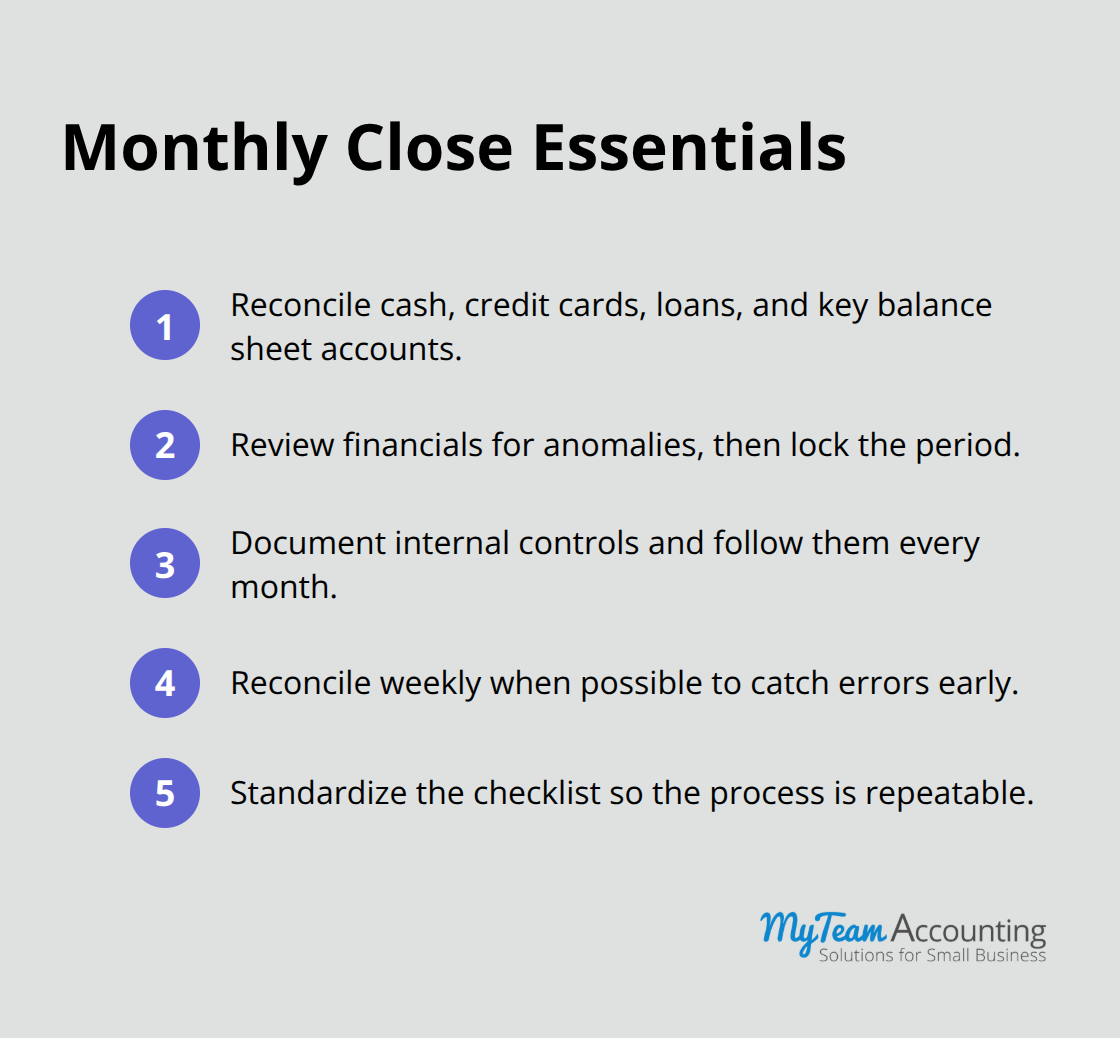
These foundational systems-a purposeful chart of accounts, attached documentation, and disciplined closing procedures-transform GAAP compliance from a tax-time scramble into an ongoing operational advantage. With these elements in place, you’re ready to identify and eliminate the accounting mistakes that most small businesses make without realizing the damage they cause.
Where GAAP Breaks Down in Real Accounting
Revenue Recognition Errors That Inflate Profitability
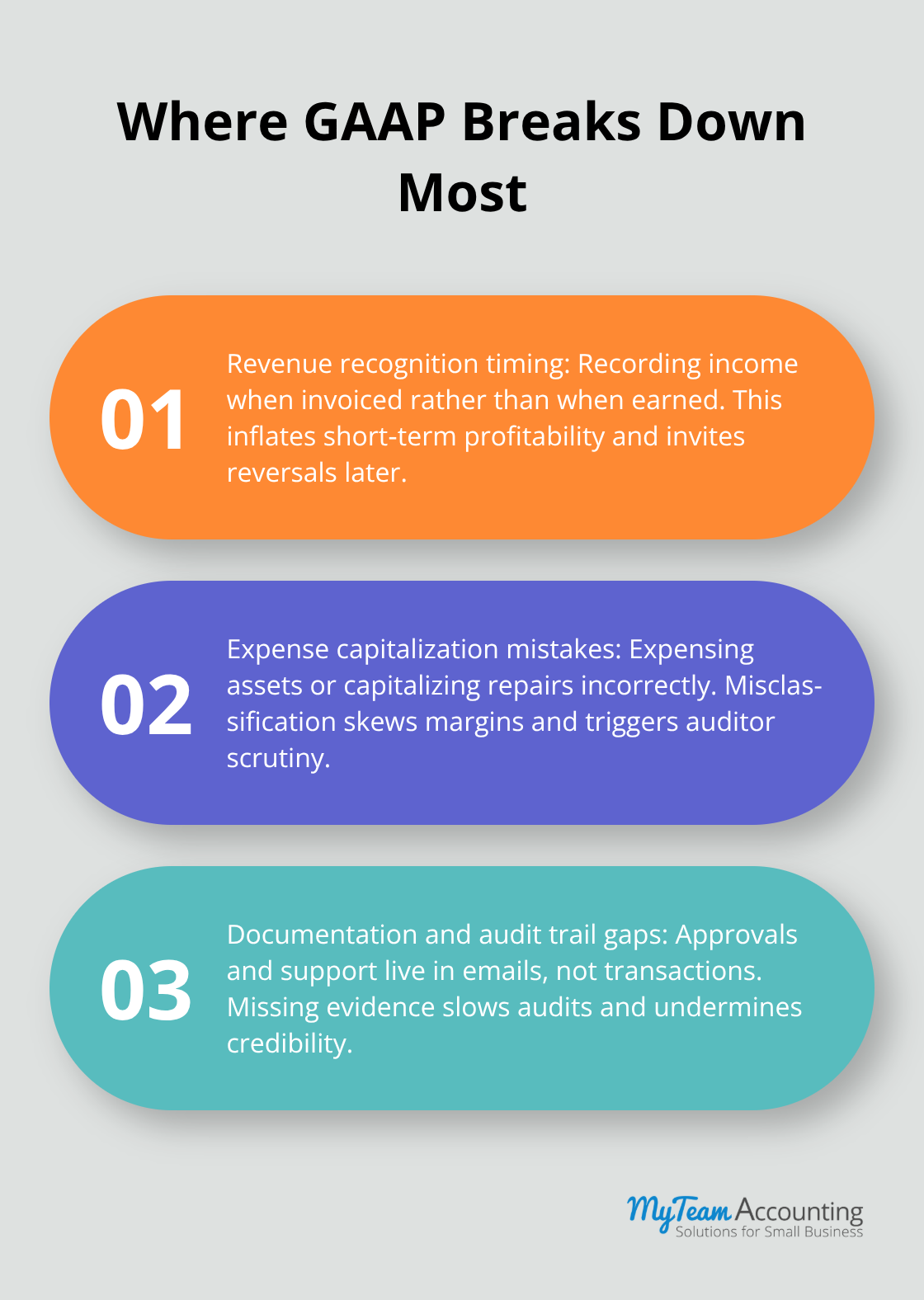
Most small business owners encounter GAAP compliance failures not from intentional rule-breaking but from the gap between what their accounting software allows and what GAAP actually requires. The first major failure point is revenue recognition timing, where many service businesses record income when they invoice rather than when they deliver the work. A consulting firm that bills clients monthly but delivers services over three months has already violated GAAP the moment the invoice leaves their system. Similarly, product-based businesses often fail to account for returns, allowances, and warranty obligations at the point of sale, inflating revenue by amounts they later reverse.
The fix requires deliberate policy decisions documented in writing before transactions occur, not retroactive reclassifications during tax season. Your accounting policies must specify exactly when you recognize revenue for each type of transaction your business handles. This clarity prevents staff members from making ad-hoc decisions that fragment your financial records.
Expense Classification and Capitalization Mistakes
The second critical mistake involves expense classification, where small manufacturers and contractors routinely expense supplies that should be capitalized and depreciated, or conversely, capitalize repairs that belong in current-period expenses. This expense capitalization versus expensing classification error directly manipulates profitability and triggers auditor red flags immediately. Construction companies frequently misclassify subcontractor costs as materials when they should be direct labor, distorting job profitability analysis and making it impossible to compare margins across projects accurately.
These errors compound over time because each misclassified transaction affects multiple periods of financial reporting. A $10,000 equipment purchase expensed immediately reduces current-year profit by the full amount, while proper capitalization spreads that cost over several years. Your financial statements then show inflated expenses in year one and artificially high profits in subsequent years, destroying the consistency that GAAP demands.
Documentation and Audit Trail Failures
Internal controls collapse when documentation lives in email threads, text messages, and spreadsheets instead of attached to actual transactions in your accounting system. A business owner approves a $5,000 expense via email to their bookkeeper, the bookkeeper enters it into QuickBooks, but the email never gets attached to the transaction, leaving no audit trail for lenders or auditors to follow. When your accounting policies shift because your business evolves, most small businesses simply start operating under new procedures without formally updating their documented policies or retraining staff on implementation.
A manufacturing company that adds a new product line needs to update its chart of accounts, inventory valuation method, and overhead allocation procedures, but instead staff members make ad-hoc decisions that fragment your financial records across multiple methodologies. This policy drift destroys the consistency that GAAP demands and makes financial comparisons between periods meaningless.
Establishing Formal Accounting Policies
Establish a formal policy document that specifies how revenue is recognized, which expenses get capitalized, how inventory is valued, and when period cutoffs occur, then review and update this document annually or whenever business structure changes. Attach this policy to your accounting system so every team member references the same standard, and require that any deviation from documented policy receives explicit approval before entry. Your policies must address the specific transactions your business handles most frequently, not generic scenarios that don’t apply to your operations.
When you implement these controls consistently, you eliminate the gaps that create GAAP violations. Your financial statements then reflect actual business performance rather than the unintended consequences of inconsistent accounting decisions.
Final Thoughts
GAAP aligned accounting transforms how lenders, investors, and buyers perceive your business. When your financial statements follow these standards consistently, you eliminate the friction that slows down capital decisions and business sales. The credibility you build through reliable reporting compounds over time, opening doors that remain closed for businesses operating on inconsistent accounting foundations.
Start this week with three concrete actions. First, audit your current chart of accounts and accounting policies against your actual business operations, then document any gaps between what you’re doing and what GAAP requires. Second, implement a monthly closing checklist that includes account reconciliations and period-end reviews, treating this process as non-negotiable rather than optional. Third, attach source documents to every transaction in your accounting system and establish formal policies that guide how your team classifies revenue, expenses, and balance sheet items.
Most small businesses can strengthen their GAAP aligned accounting within 60 days by focusing on the highest-impact areas: revenue recognition accuracy, expense classification discipline, and documented internal controls. Your financial foundation determines whether your business can access capital when opportunities emerge and whether you can command full value when you eventually sell. Contact our team to review your accounting policies and procedures and identify where your current practices diverge from GAAP standards.