Bookkeeping Efficiency Improvements: Faster, Cleaner Books
Messy books drain time and create costly errors. Most small business owners lose hours each month to manual data entry, misclassified transactions, and incomplete reconciliations.
Bookkeeping efficiency improvements don’t require overhauling your entire system. With targeted strategies and the right tools, you can dramatically speed up your process while strengthening financial accuracy.
What’s Really Holding Your Bookkeeping Back
The Transaction Recording Trap
Most small business owners think they need better discipline to fix slow bookkeeping. The real problem is structural. Delayed transaction recording creates a backlog that compounds throughout the month. When you finally reconcile, you chase ghost entries instead of working with current data. Many business owners delay bookkeeping tasks until the end of the month or even tax season, and that delay directly correlates with higher error rates during tax season. The cost isn’t just time-it’s accuracy.
How Misclassification Fragments Your Financial Picture
When transactions sit in limbo, expense classifications become guesses rather than deliberate decisions. You categorize a $500 software subscription as office supplies one month and software licenses the next, fragmenting your financial picture and making trend analysis impossible. Misclassified revenue creates even bigger headaches because it distorts your understanding of which services or products actually drive profit. This confusion spreads throughout your accounts, making it nearly impossible to identify which revenue streams truly generate income.
The Reconciliation Gap
The third silent killer is neglected reconciliation. Many business owners reconcile their books quarterly or only when preparing taxes, leaving three months of potential errors undetected. A single missed transaction can cascade through your accounts, inflating expenses or deflating revenue by thousands of dollars without anyone knowing until it’s too late to correct. These gaps accumulate quickly, and the longer you wait, the harder the cleanup becomes.
Moving Forward with Structural Solutions
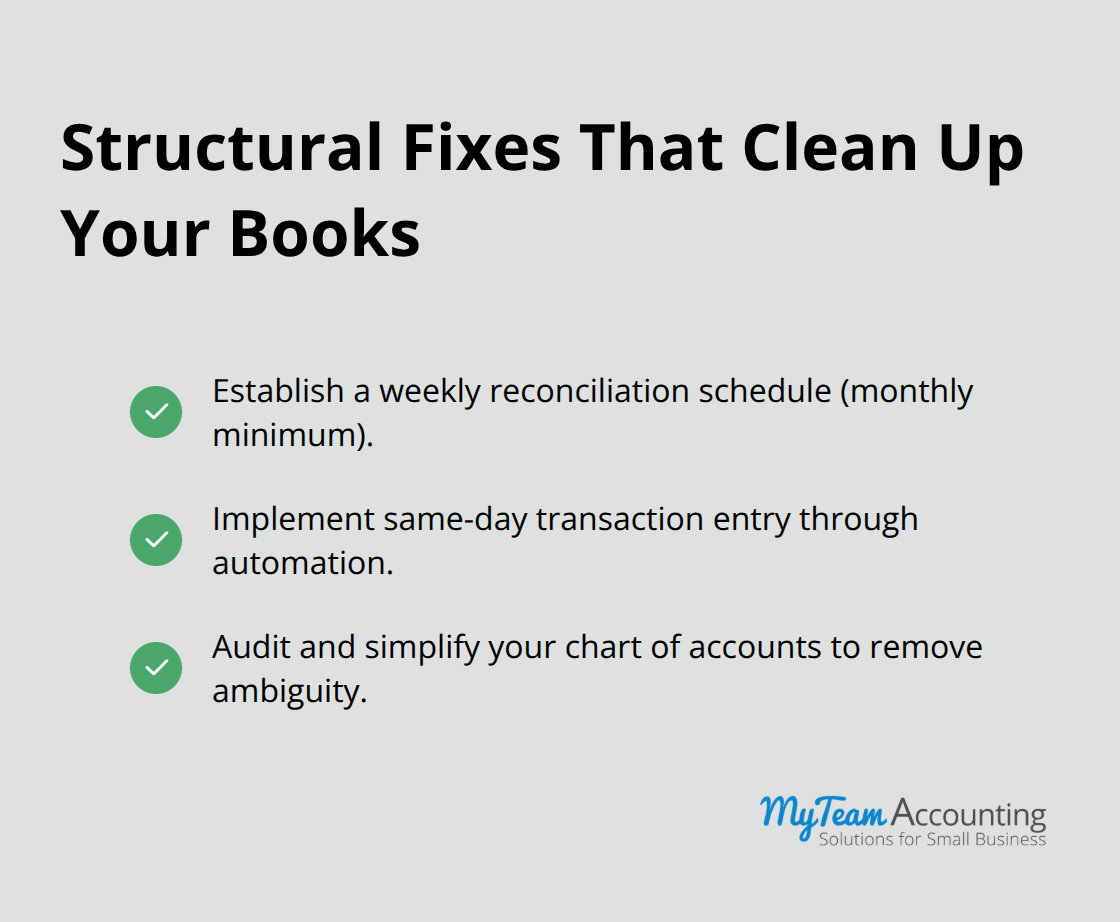
You solve these issues by confronting them directly. Establish a non-negotiable reconciliation schedule with weekly frequency for high-transaction businesses or monthly as a minimum, implement same-day transaction entry through automation, and audit your chart of accounts to eliminate classification ambiguity before problems start. Small changes to your process compound into dramatically cleaner books and far fewer scrambles during financial reviews. These foundational fixes set the stage for the streamlined strategies that follow.
How to Build a Bookkeeping System That Runs on Automation
Bank feeds eliminate Manual Data Entry
Automation stands as the single most powerful lever you have to eliminate wasted hours in your bookkeeping process. Most small business owners spend 15 to 20 hours monthly on manual data entry alone. That time disappears the moment you connect your bank accounts and credit cards directly to your accounting software through bank feeds. Cloud-based platforms like QuickBooks Online and Xero pull transactions automatically, categorize them based on your historical patterns, and flag suspicious entries for review. Your transaction backlog shrinks from weeks to days, and you spend your time reviewing decisions rather than typing numbers.
Set up bank feeds for every account your business uses, not just your main checking account. Many owners skip credit cards or savings accounts, creating blind spots that force manual reconciliation later. Configure your software to match transactions automatically when confidence levels exceed 95 percent, and review only the exceptions. This single adjustment reduces your monthly data entry time by 60 to 70 percent.
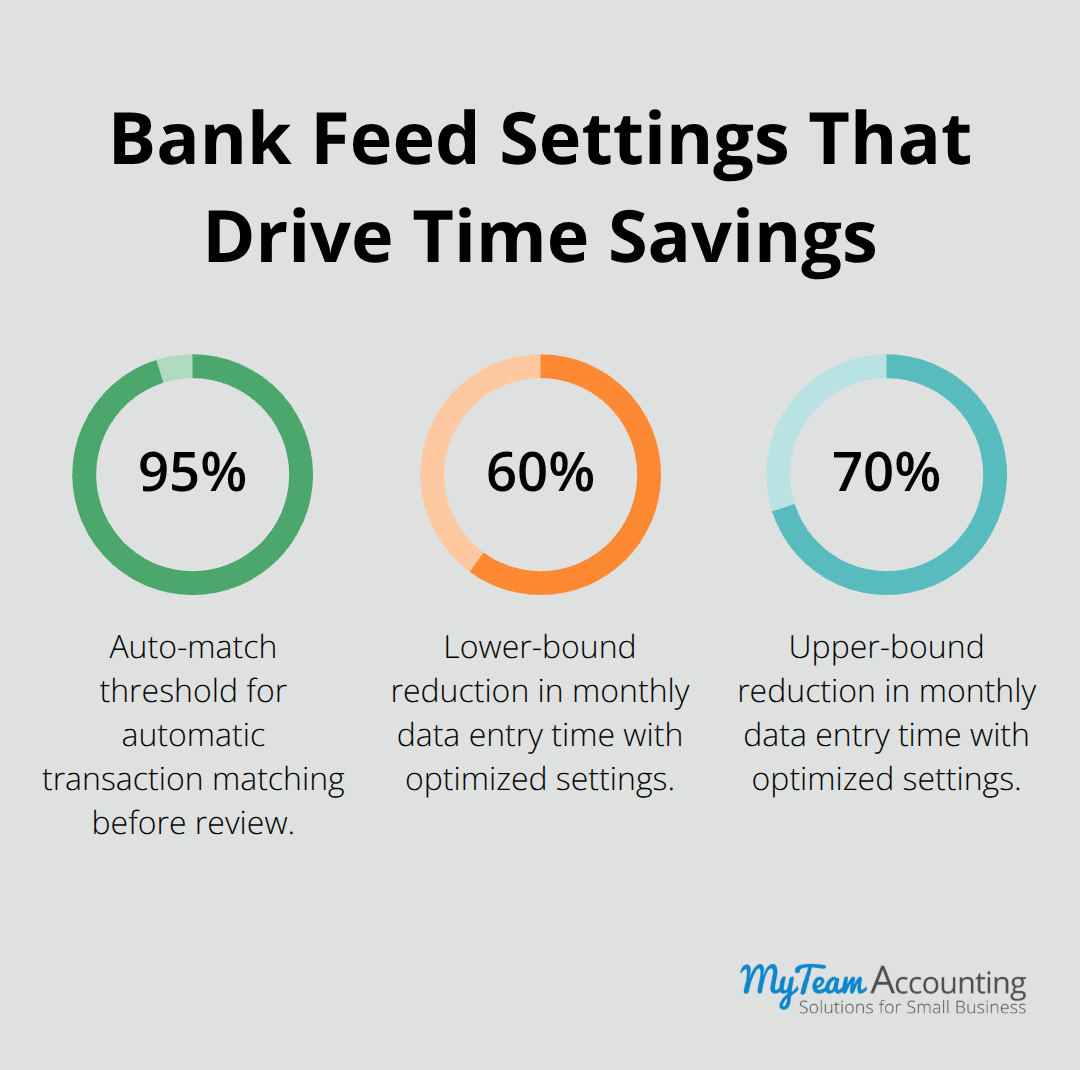
Chart of accounts Structure Determines Success
Your chart of accounts structure determines whether automation actually works or creates chaos. A bloated chart with redundant or overlapping categories sabotages your efforts because the software cannot categorize correctly when your structure lacks clarity. Audit your existing accounts ruthlessly and consolidate anything that serves the same purpose. If you maintain both Office Supplies and Office Equipment, decide which one you actually use and delete the other. Establish naming conventions that make sense to anyone reviewing your books, not just you (for example, use Contractor Labor instead of just Contractors, and Software Subscriptions instead of Software).
Weekly Reconciliation Catches Errors Early
Once your chart is clean and logical, reconcile your accounts weekly if you process more than 50 transactions weekly, or monthly as an absolute minimum. Weekly reconciliation catches errors before they multiply and gives you current financial snapshots instead of stale month-end reports. Set a specific day each week, block 30 to 45 minutes on your calendar, and treat it as non-negotiable. The reconciliation process itself becomes faster once your transaction recording stays current and your classifications remain consistent, because you match small discrepancies rather than hunt through months of confusion.
These foundational automation practices transform your bookkeeping from a time-consuming burden into a streamlined operation. With bank feeds handling data entry, a logical chart of accounts guiding categorization, and weekly reconciliation keeping everything current, you create the conditions for the next critical phase: selecting tools and systems that amplify these efficiencies even further.
Which Tools Actually Deliver Faster Bookkeeping
Cloud-Based Software Connects Your Entire Business
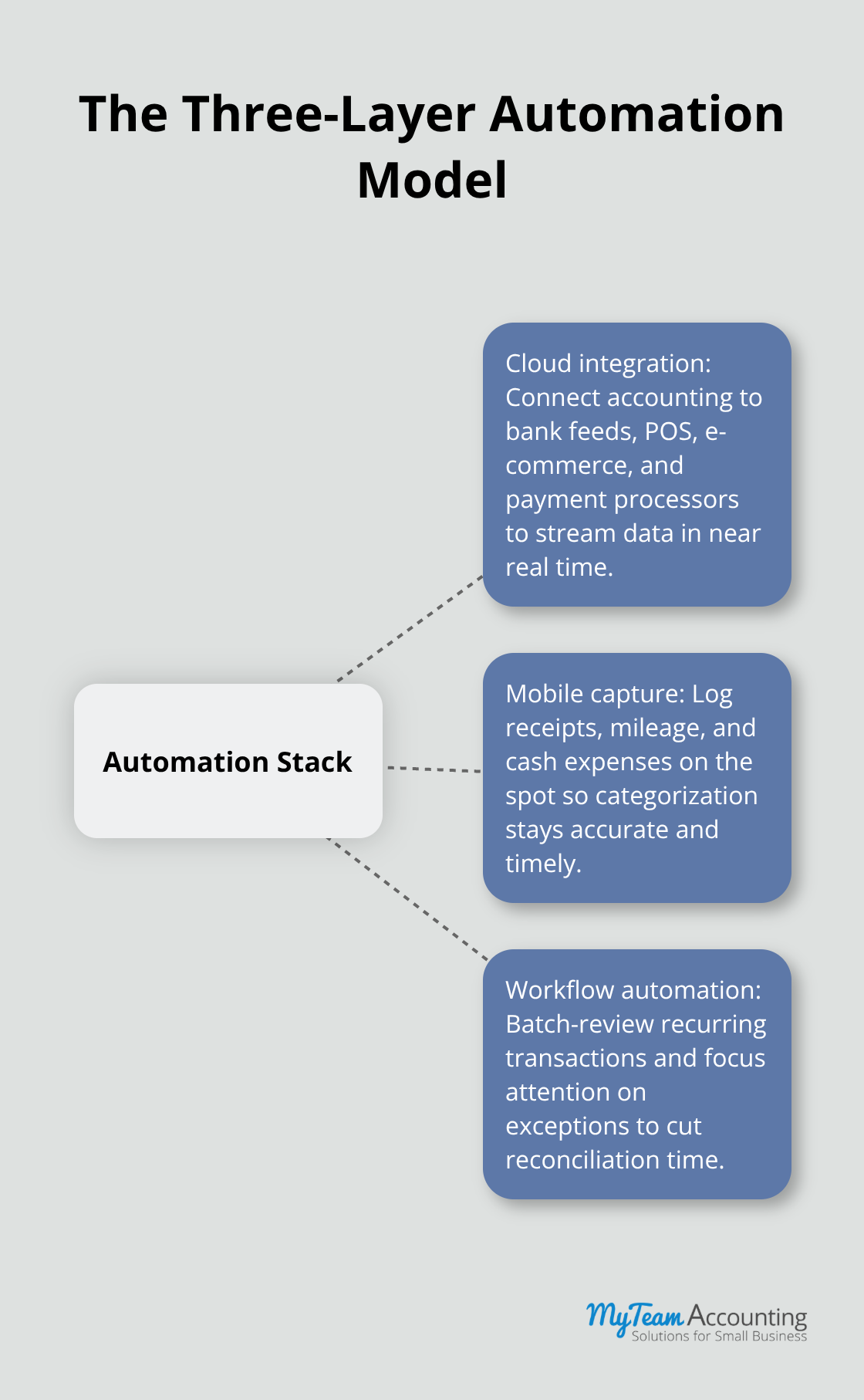
Cloud-based accounting software forms the foundation of modern bookkeeping efficiency, but not all platforms deliver equal speed gains. QuickBooks Online and Xero lead the market because they integrate directly with your bank feeds, payment processors, and invoicing systems without requiring manual intervention. The critical difference between fast bookkeeping and slow bookkeeping often comes down to whether you use a platform that connects to your entire business ecosystem or one that operates in isolation. When your accounting software connects to your point-of-sale system, your e-commerce platform, and your payment processor simultaneously, transactions flow into your books within hours rather than days. This real-time data flow eliminates the reconciliation delays that plague businesses still relying on desktop software or spreadsheets. Most small business owners waste 10 to 15 hours monthly simply waiting for transaction data to arrive before they can reconcile, a problem that vanishes entirely with proper cloud integration.
Mobile Apps Capture Expenses in Real Time
Mobile transaction capture represents the second critical efficiency layer that most small business owners completely overlook until they implement it. Your accountant or bookkeeper no longer needs to sit at a desk to photograph receipts, record mileage, or capture cash expenses the moment they occur. Xero’s receipt capture feature and QuickBooks Online’s mobile app allow real-time expense logging directly from job sites, client meetings, or anywhere your business operates. Expenses recorded immediately maintain accurate categorization because the context remains fresh, whereas expenses entered three weeks later become guesses. This immediate capture transforms your entire reconciliation process and eliminates the backlog that typically consumes hours each month.
Workflow Automation Handles Repetitive Decisions
Workflow automation and batch processing then handle the repetitive decision-making that consumes the remaining hours. Instead of reviewing transactions one at a time, modern accounting software lets you process 50 categorized transactions in a single batch review, approve them together, and move forward. Configure your software to automatically categorize recurring transactions like monthly subscriptions, payroll deposits, or regular vendor payments, then allocate your review time only to unusual or high-value items. This approach cuts your monthly reconciliation time from four hours to under 90 minutes while actually improving accuracy because you focus human judgment where it matters most. The businesses that implement all three layers-cloud integration plus mobile capture plus workflow automation-typically report spending 5 to 8 hours monthly on bookkeeping instead of the 20 to 25 hours their competitors still waste.
Final Thoughts
Bookkeeping efficiency improvements deliver measurable returns that extend far beyond saving a few hours each month. When you eliminate delayed transaction recording, fix misclassifications, and establish consistent reconciliation practices, your financial records become a reliable foundation for decision-making rather than a source of stress during tax season. Cleaner financial records unlock benefits that compound over time: you gain accurate profit-and-loss visibility within days instead of weeks, spot cash flow problems before they become crises, and make pricing and hiring decisions based on current data.
The three-layer approach outlined here works because it addresses the structural problems that slow most small businesses down. Bank feeds eliminate manual data entry bottlenecks, a clean chart of accounts ensures consistent categorization, and weekly reconciliation catches errors before they compound. Your accountant or bookkeeper then spends less time chasing errors and more time providing strategic insights that actually move your business forward.
Start with one change that costs you the most time right now. If manual data entry dominates your month, implement bank feeds immediately; if misclassifications plague your reconciliations, rebuild your chart of accounts first; if you lack current financial visibility, establish a weekly reconciliation schedule today. Most small business owners see dramatic time savings within 30 days of making their first structural adjustment, and your cleaner, faster bookkeeping system starts with that single decision to prioritize efficiency.