
Standardized Bookkeeping Procedures for Consistency
Many small business owners struggle with inconsistent bookkeeping practices that lead to errors, missed compliance deadlines, and poor financial visibility. Standardized bookkeeping procedures eliminate these pain points by creating a reliable system for recording and managing transactions.
When your team follows consistent processes, you gain accurate financial data that supports confident decision-making and simplifies tax season. This guide walks you through implementing standardized procedures that work for your business size and complexity.
Why Standardized Procedures Matter
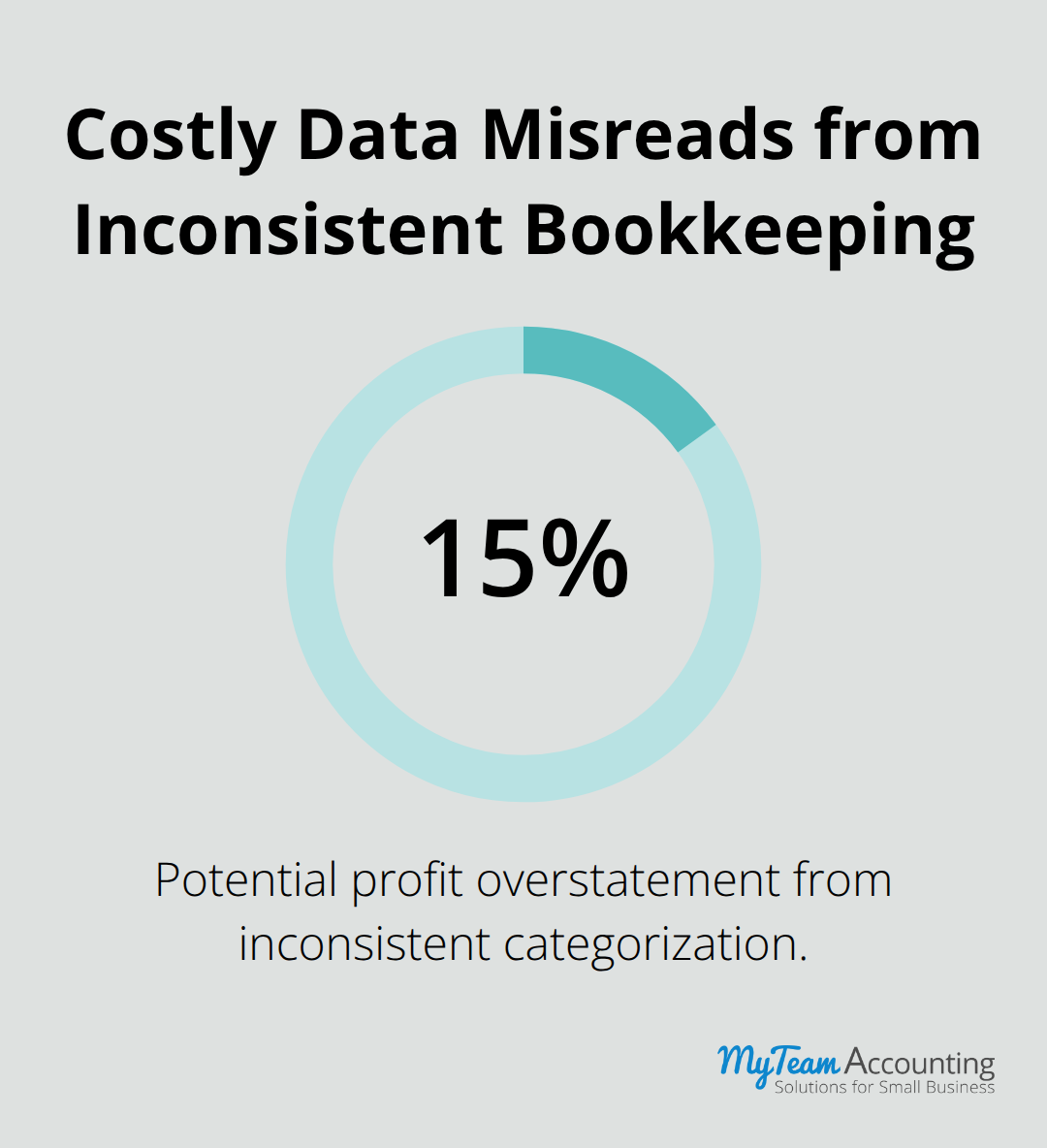
Inconsistent bookkeeping directly costs you money through preventable errors and wasted time hunting down discrepancies. When transactions are recorded differently across months or team members classify expenses into the wrong accounts, your profit-and-loss statement becomes unreliable. You might think you earned 15% more than you actually did, or you could miss legitimate tax deductions worth thousands of dollars. A single misclassified expense that goes unnoticed for a full year means your accountant must spend extra hours at year-end correcting the mess, adding hundreds to your tax preparation bill.
Accuracy That Stops Errors Before They Happen
Standardized procedures create checkpoints that catch mistakes early. When you reconcile your bank account monthly against a consistent chart of accounts, timing differences and duplicate entries surface immediately instead of hiding in your records for months. The IRS advises you to keep employment tax records for at least four years after the date that the tax becomes due or is paid, whichever is later, and if your books are disorganized, you cannot produce those records quickly or accurately if audited. Small business owners who implement weekly transaction updates and monthly reconciliations report that their year-end tax prep runs faster because their accountant spends minimal time cleaning data. A standardized workflow also means your team cannot accidentally record the same invoice twice or forget to enter a deposit, because the system itself enforces consistency.
Compliance and Audit Readiness Without Stress
Audits and tax filings become straightforward when your records follow a predictable structure. An organized chart of accounts with clear categories for assets, liabilities, equity, revenue, and expenses means your accountant can prepare accurate financial statements without requesting clarification on every line item. Sales tax tracking becomes automatic if you standardize how you record taxable versus non-taxable transactions, eliminating the scramble to reconstruct sales data quarterly. Many businesses that outsource bookkeeping see faster loan approvals because lenders receive investor-ready financials with consistent formatting and reliable numbers. When your books are standardized, you spend zero time explaining why expenses are categorized strangely or why your P&L looks different from last month.
Better Decisions Built on Reliable Data
You cannot make sound business decisions on guesswork. When your bookkeeping is standardized, monthly financial reports become actionable intelligence instead of confusing spreadsheets. A restaurant owner who implements job costing and monthly income statements can immediately see whether food costs are creeping up or labor expenses are out of line, allowing pricing and staffing adjustments before margins erode. An e-commerce seller who integrates marketplace data with accounting software reveals true product margins after you account for shipping costs and marketplace fees, exposing which products actually generate profit. Without standardized procedures, these insights stay hidden until tax season or worse, until cash flow problems force a crisis. Standardized bookkeeping means you review accurate P&L and balance sheet statements every month, spot trends early, and adjust your business strategy before problems compound. Once you understand how standardized procedures protect your bottom line, the next step is to build the foundation that makes consistency possible.
Building the Foundation That Drives Consistency
Structure Your Chart of Accounts for Real Business Insights
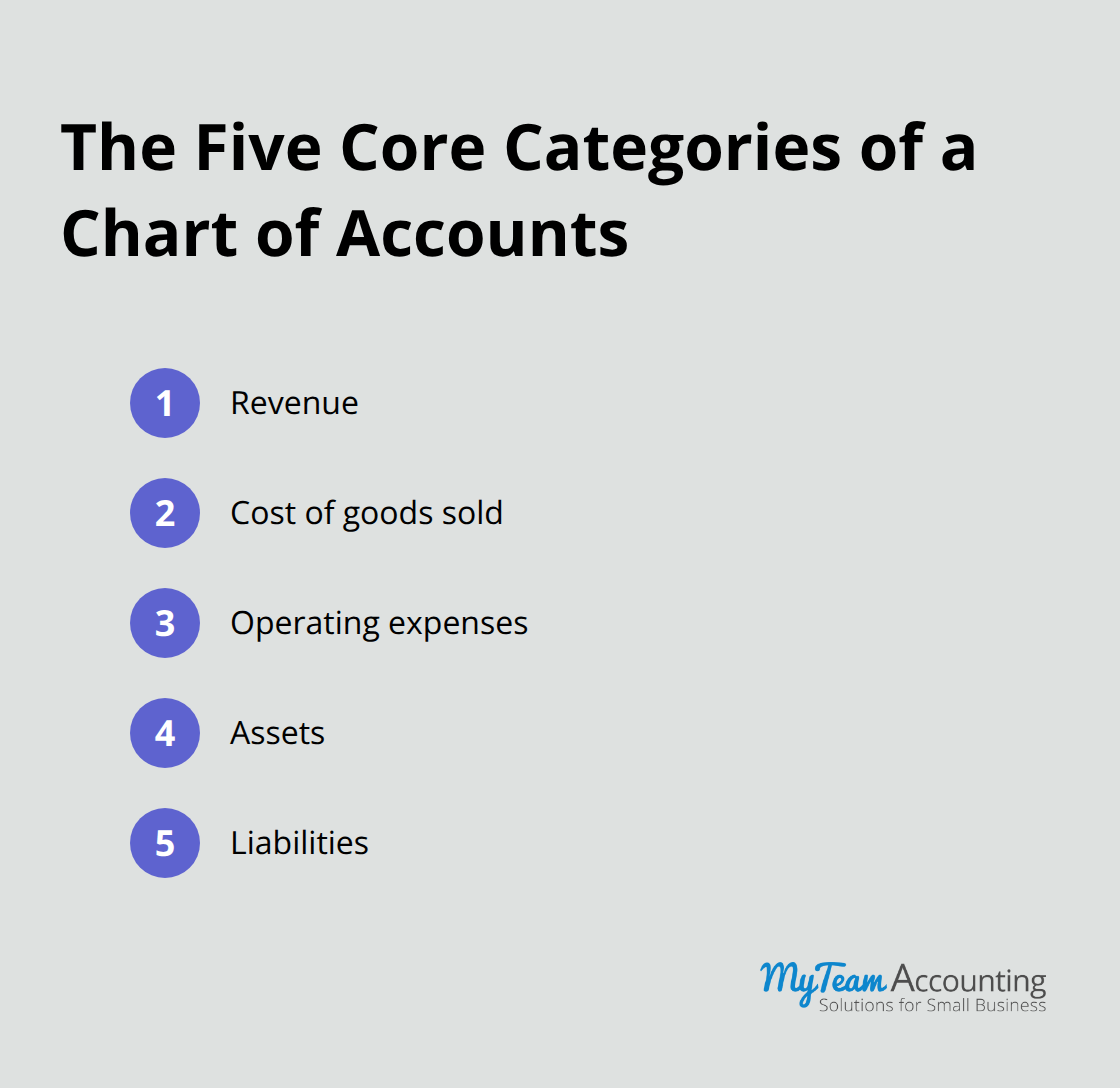
Your chart of accounts is the skeleton of standardized bookkeeping, and you must build it correctly from the start or you will spend years fighting against a broken structure. Most small business owners inherit a messy chart of accounts or create one hastily, then realize too late that their expense categories are too vague or overlap in ways that make reporting impossible. Start with five core categories: revenue, cost of goods sold, operating expenses, assets, and liabilities. Within each category, you create specific accounts that match how you actually run your business. A restaurant cannot lump all food, labor, and supplies into a single expense account and expect to understand margins.
Enforce Consistent Transaction Classification Across Your Team
Once your chart of accounts is locked in, you enforce a single rule: every transaction must be recorded the same way every single time. This means your team does not get to decide whether a $200 software subscription goes into office supplies or software expenses. You decide, document it in a procedures manual, and everyone follows that decision for the next five years. When transactions are classified consistently, your monthly profit-and-loss statement becomes predictable and comparable month-to-month, revealing genuine trends instead of fluctuations caused by inconsistent categorization. Businesses that use cloud-based bookkeeping with consistent categorization process transactions faster and catch errors earlier than those relying on manual methods, because the software enforces rules and flags unusual patterns.
Reconcile Monthly on a Fixed Schedule
Monthly reconciliation is where standardized procedures prove their worth, and you must perform it on a fixed schedule that never moves. You pick the first Friday of each month or the 15th, then you treat it as non-negotiable. You pull your bank statement, open your accounting software, and you match every transaction line-by-line against what you recorded. Do not skip this step because you are busy or because you think everything looks fine. The IRS expects you to keep accurate records, and reconciliation is your proof that you do. When you reconcile monthly, you catch timing differences between when you recorded a check and when the bank cleared it, you spot duplicate entries before they distort your numbers, and you identify missing transactions that never made it into your system. A business that reconciles quarterly or annually instead of monthly might not discover a $5,000 data entry error until tax season, forcing your accountant to spend extra hours digging through months of records. A business that reconciles monthly catches that error in 30 days.
Review Financial Reports Every Month Without Exception
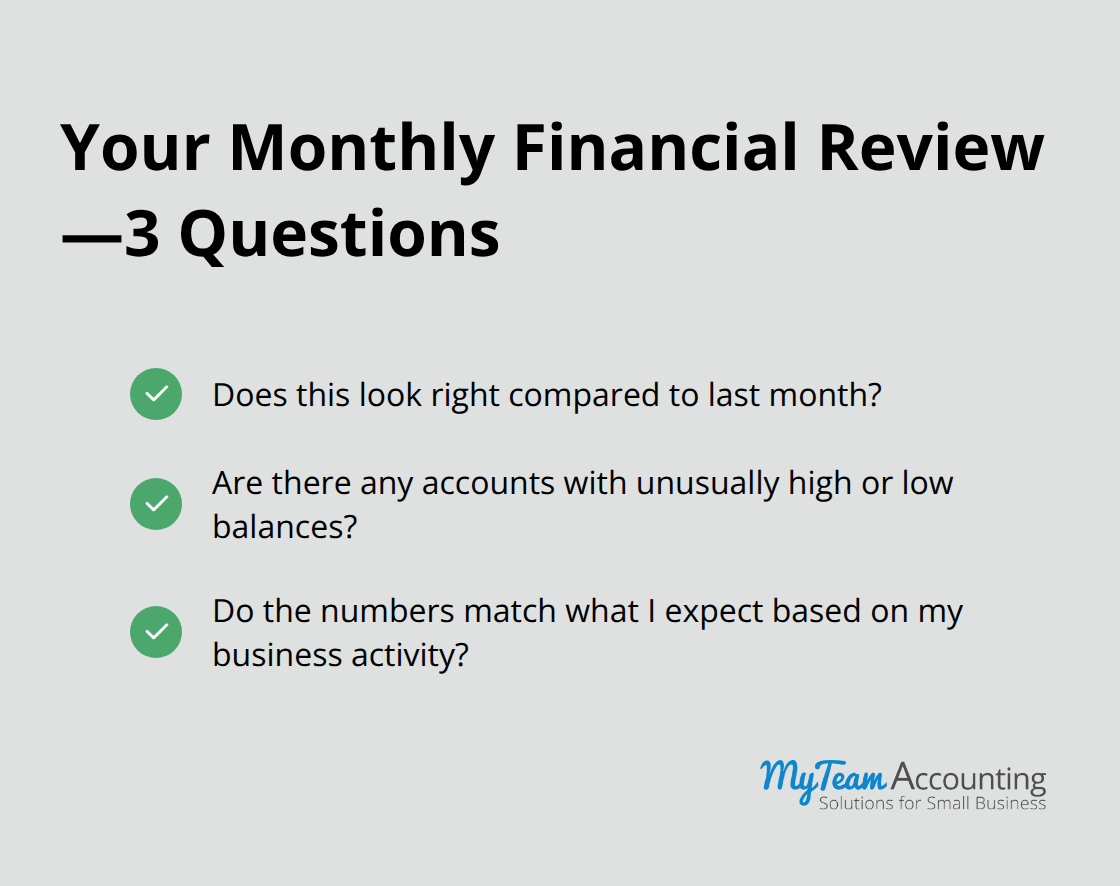
Beyond bank reconciliation, you review your financial reports every month without fail. You print or download your profit-and-loss statement and balance sheet, then you ask yourself three questions: Does this look right compared to last month? Are there any accounts with unusually high or low balances? Do the numbers match what I expect based on my business activity?
Making Standardized Procedures Stick in Your Business
Document Your Procedures in a Living Manual
Documentation determines whether your team follows standardized procedures or reverts to guesswork, and most businesses fail because they create a manual once and then abandon it. You need a living document that sits in a shared folder your team accesses weekly, not a PDF buried in an email from three years ago. Write down exactly how you handle the five most common transactions in your business: recording a customer payment, entering a vendor invoice, processing a refund, reconciling your bank account, and categorizing payroll. For each process, include the specific account codes from your chart of accounts, the sequence of steps in your accounting software, and the person responsible for completing it.
A restaurant owner should document that all food purchases go into account 5200, all beverage purchases into 5210, and labor splits between 6100 for kitchen staff and 6110 for front-of-house, with no exceptions. An e-commerce business should specify that marketplace fees always post to 5300, product returns reduce revenue in account 4010, and shipping costs go into 5400, not mixed into product costs. Your procedures manual becomes the source of truth that eliminates guesswork. Post it in Slack, link it in your accounting software, and reference it every time someone asks where to record a transaction. Without written procedures, you rely on institutional knowledge that evaporates the moment someone leaves your team, forcing you to restart from scratch.
Train Your Team Through Hands-On Practice
Training your team on these procedures happens in three distinct stages, not one session. First, you conduct a live walkthrough where you show someone step-by-step how to record a transaction in your accounting software while they watch and take notes. Second, you have them record a transaction while you watch and correct them in real time. Third, you have them record five transactions independently, then you review their work and provide feedback before they process real business data.
This hands-on approach takes two to three hours per person but eliminates months of subtle errors. Many businesses make the mistake of sending a new bookkeeper a training video or written guide and assuming they understand, then wonder why transactions are categorized wrong for months. Quarterly refresher sessions keep your team aligned as your business evolves and new transaction types emerge. Your team stays sharp and catches edge cases before they corrupt your data.
Leverage Software to Enforce Consistency Automatically
Cloud-based accounting software like Xero or QuickBooks Online automates much of the categorization work through bank feeds and recurring transaction templates, which means your team spends less time typing and more time reviewing whether the software categorized transactions correctly. Set up recurring templates for payroll entries, regular vendor payments, and monthly utility bills so your team cannot accidentally change the account codes. The software itself becomes your enforcement mechanism because it flags transactions that fall outside normal patterns, alerting your team to review unusual entries before they corrupt your data. This automation reduces human error and ensures that even new team members follow your standardized procedures from day one.
Final Thoughts
Standardized bookkeeping procedures transform how you manage your business finances by eliminating guesswork and creating a reliable system that your entire team follows. The foundation you build today-a clear chart of accounts, consistent transaction classification, monthly reconciliation, and regular financial review-pays dividends for years. Your team spends less time correcting errors, your accountant spends fewer hours at year-end cleaning up messy data, and you gain the confidence to make decisions based on accurate numbers instead of assumptions.
As your business grows, standardized procedures scale with you without requiring a complete overhaul. A restaurant that documents how it tracks food costs, labor, and supplies can add new locations while maintaining identical reporting across all units. An e-commerce seller who standardizes how it records marketplace fees and product costs can expand to new platforms without losing visibility into true margins. Lenders and investors trust businesses with clean, consistent financial records because those records signal competence and reliability.
Start your standardization journey with three concrete actions. First, audit your current chart of accounts and rebuild it around how your business actually operates. Second, document your five most common transactions in a procedures manual your team can access anytime, and third, invest two to three hours training each team member on your specific processes through hands-on practice. Talk to an expert who can help you implement standardized bookkeeping procedures tailored to your business and eliminate the financial chaos that holds you back.