
Cash Flow Forecasting 2026: Planning for the Next Growth Cycle
As we move deeper into 2026, small business owners face a critical challenge: understanding where their money goes and where it’s coming from. Cash flow forecasting isn’t just accounting-it’s your roadmap to sustainable growth and survival during uncertain times.
Without visibility into your cash position, even profitable businesses can stumble. This guide walks you through building forecasts that actually work, so you can invest confidently in your next growth phase.
Why Cash Flow Forecasting Matters in 2026
Economic volatility in 2026 demands that small business owners stop treating cash flow as a passive accounting function. The Federal Reserve’s interest rate decisions continue to ripple through lending markets, making access to credit less predictable than it was five years ago. This means your internal cash reserves become your primary buffer against unexpected costs or revenue dips.
Economic Uncertainty Makes Cash Visibility Essential
A business that generates $500,000 in annual revenue can fail within 90 days if cash flow stops, regardless of profitability on paper. Most small business failures stem not from unprofitable operations but from running out of liquid cash to cover payroll, inventory, or supplier payments. Forecasting forces you to confront this reality months in advance rather than discovering it when your bank account hits zero.
The businesses that thrive in uncertain markets know their cash position 60 to 90 days out. They don’t react to surprises-they anticipate them. This forward visibility transforms cash flow from a reactive concern into a strategic advantage that shapes every major business decision.
Seasonal Patterns Determine Your Survival Timeline
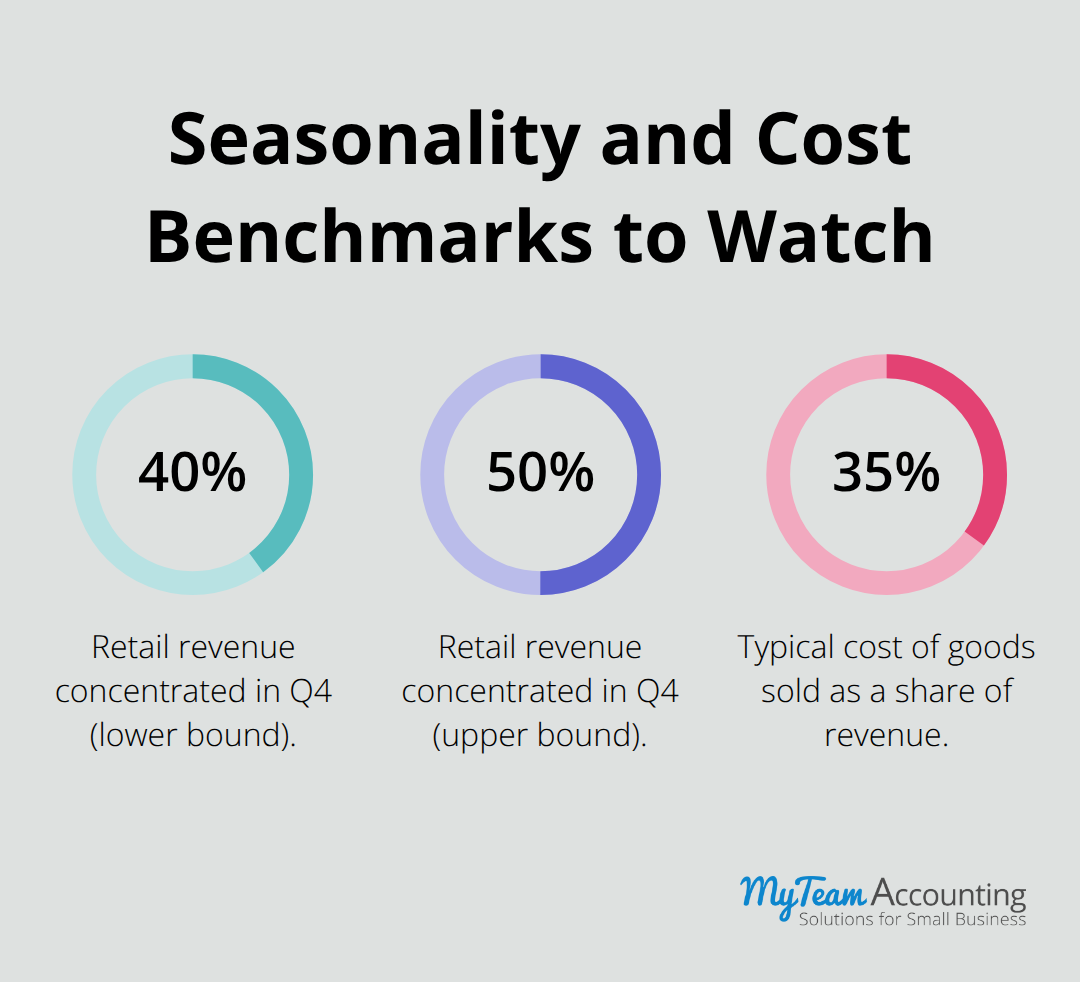
Your revenue likely doesn’t arrive evenly throughout the year, yet many owners treat it as if it does. Retail businesses see 40 to 50 percent of annual revenue concentrate in Q4, while service businesses often experience summer slowdowns. If you haven’t mapped out when cash actually enters your business versus when expenses leave it, you operate blind.
Forecasting reveals the specific months when you’ll face cash crunches, allowing you to secure financing before desperation forces poor decisions. A contractor might generate invoices in month one but not receive payment until month three (creating a two-month gap where payroll and material costs drain reserves). Identifying these patterns means you can negotiate better payment terms with suppliers, plan owner draws strategically, or arrange a line of credit during healthy months rather than scramble during tight ones.
Prevention Beats Crisis Management
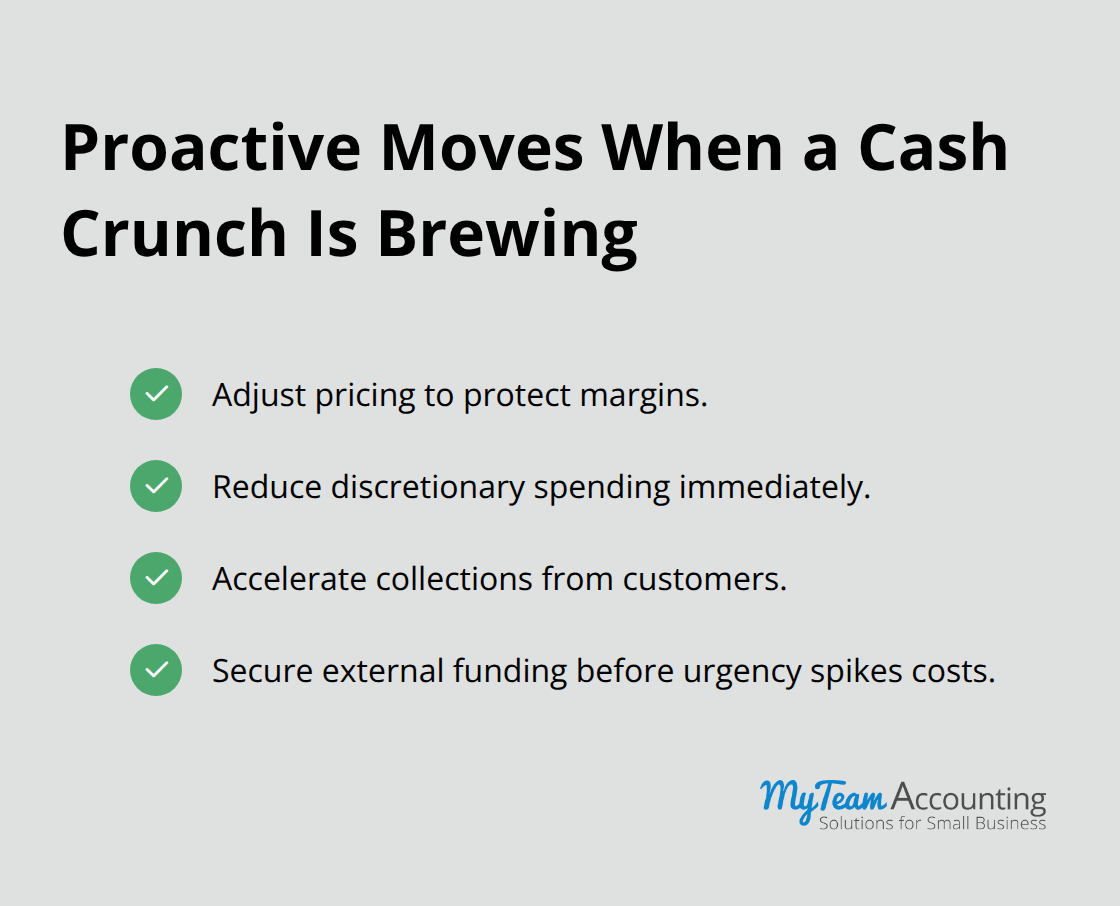
Cash shortfalls rarely announce themselves politely. They accelerate quickly once they start, consuming your attention and forcing you into reactive decisions that damage growth plans. A forecasting system catches problems when you still have options: adjust pricing, reduce discretionary spending, accelerate collections, or secure external funding.
The alternative is discovering mid-month that you can’t make payroll, which forces emergency borrowing at predatory rates or, worse, delayed payments that destroy vendor relationships and your business reputation. Small business owners who forecast quarterly rather than annually catch emerging problems within a manageable window. This isn’t about pessimism-it’s about control (when you know cash will tighten in March, you can reduce spending in January and February, renegotiate supplier terms in December, or adjust your growth timeline).
The businesses that fail are those surprised by their own cash position. Those that anticipated it move forward with confidence into the next phase of their strategy.
Building Your Forecast from Real Numbers
Establish Your Foundation with Actual Data
Pull your bank statements, credit card reconciliations, and accounting software reports from the past 24 months-this is your foundation, not what you think happened. Most small business owners underestimate seasonal revenue swings by 20 to 30 percent because they work from memory rather than data. If you use QuickBooks or Xero, run a profit and loss statement by month for the past two years; this immediately reveals which months consistently underperform and which ones spike. You will discover you’ve been planning around an imaginary revenue curve instead of your actual one.
Segment Revenue by Source to Identify Predictability
Segment your revenue by source because forecast accuracy depends on understanding which revenue streams are predictable and which fluctuate wildly. E-commerce businesses should separate direct sales from marketplace fees. Service businesses need to distinguish between recurring clients and one-time projects. A contractor with three long-term clients generating 60 percent of revenue faces different risk than one with 40 small clients. Once you map your revenue sources, project forward by applying conservative growth assumptions to each category based on your current sales pipeline. If you closed 15 deals last quarter and your pipeline contains 8 qualified prospects, forecast 12 deals and build upside scenarios separately rather than chase optimistic numbers.
Account for Fixed and Variable Expenses Separately
Fixed expenses demand brutal honesty because they don’t negotiate. Rent, insurance, loan payments, and software subscriptions stay the same whether revenue arrives or not. List every fixed cost and verify each amount against your actual contracts and invoices from the past three months. Variable expenses-materials, commission, freelancer costs-scale with revenue, so calculate them as a percentage of sales rather than fixed dollar amounts. If your cost of goods sold runs 35 percent of revenue, apply that consistently across your forecast instead of guessing month-to-month fluctuations.
Place One-Time Expenses in Their Actual Months
The critical mistake most owners make is treating one-time expenses as monthly expenses and monthly expenses as one-time costs. Equipment purchases, tax payments, and annual insurance renewals should appear in the specific months they actually occur, not spread evenly across 12 months. A business that owes quarterly taxes in January, April, July, and October needs to reserve cash in those preceding months or face a shortfall that feels unexpected but was entirely predictable.
Structure Your Forecast for Immediate and Long-Term Visibility
Your forecast should extend 12 months minimum, with months one through three in weekly detail and months four through twelve in monthly buckets. This structure catches immediate cash crunches while maintaining visibility into longer-term patterns. Update your forecast monthly as actual results come in, adjusting future projections based on what actually happened versus what you predicted. With accurate numbers in place, you can now identify exactly where your business needs to invest to sustain the growth ahead.
Growth Investments That Actually Pay Off
Your forecast now shows exactly when cash arrives and when it leaves. This visibility creates a dangerous temptation: spend aggressively during strong months and assume the pattern continues indefinitely. The businesses that sustain growth through 2026 resist this impulse. Instead, they use their forecast as a blueprint for strategic reinvestment that compounds over time rather than depletes reserves. Technology infrastructure, qualified team members, and structured financing aren’t luxuries you pursue after growth happens-they’re investments you time precisely to enable growth without creating cash crunches. A $50,000 equipment purchase in month two looks reckless until your forecast shows it will generate $15,000 monthly in additional revenue starting month four, making the payback period 3.3 months. The discipline here matters enormously: most small business owners either invest too late (after cash flow already strained from growth) or too aggressively (consuming reserves needed for operational stability). Your forecast eliminates guesswork from this decision.
Technology Spending Must Solve a Specific Bottleneck
Software and systems consume disproportionate capital in small business budgets, yet owners rarely calculate the actual return. A QuickBooks upgrade, Shopify expansion, or CRM implementation should directly address a measurable constraint that limits revenue or consumes excessive labor. If your team spends eight hours weekly on manual invoice tracking, that’s roughly $5,000 annually in wasted labor at $30 per hour. Automating this process with accounting software costing $2,000 annually pays for itself in four months while freeing your team for higher-value work. Conversely, purchasing enterprise software because competitors use it wastes money if your current system handles your actual volume. Your forecast reveals which months can absorb technology spending without threatening payroll or supplier payments. Deploy these investments during your strong cash months, not during seasonal slowdowns. The critical mistake owners make is treating technology as a one-time purchase rather than an ongoing expense category. A $5,000 software implementation often requires $200 monthly maintenance, training, and integration work. Build this recurring cost into your variable expense projections before you commit to the purchase.
Hiring Decisions Require Cash Reserve Coverage
Payroll represents your largest fixed expense once you employ people, yet most owners hire based on workload rather than cash availability. A new $50,000 annual salary represents $4,167 monthly in committed cash that continues whether revenue dips or not. Before hiring, you should have enough cash flow to cover the new employee’s total cost for at least 2-3 months. This buffer protects you during the 60 to 90 day period when recruiting, hiring, and onboarding occurs before new team members contribute revenue. If your forecast shows Q1 cash declining to $8,000 and you’re considering a $4,000 monthly salary hire, you’ve eliminated your operational buffer. Instead, hire during strong cash periods and structure compensation to include performance-based components during slower months. A salesperson earning $3,000 base plus commission scales your payroll with revenue, reducing fixed burden during downturns. Many owners resist this approach, believing it discourages employee loyalty. The reality: an employee you cannot afford to keep destroys morale faster than transparent performance-based pay. Your forecast identifies exactly which months can safely absorb new payroll without threatening business stability, and which months demand contractor relationships instead.
Financing Decisions Should Happen During Strength, Not Desperation
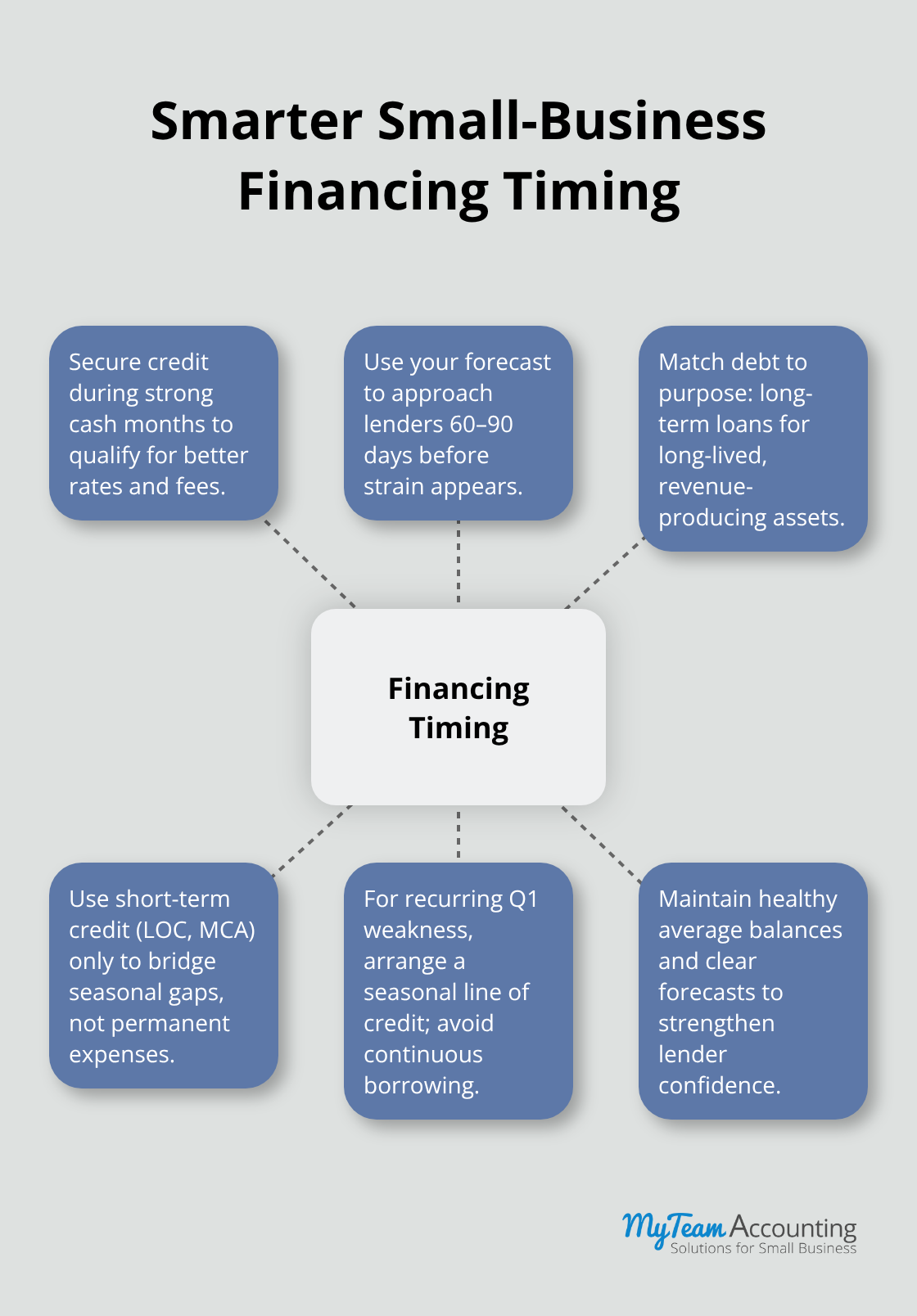
Small business owners approach financing backwards. They seek loans or lines of credit after cash flow tightens, when lenders view them as risky. Your forecast reveals 60 to 90 days in advance which months will strain cash, creating the perfect timing to approach lenders. A $50,000 line of credit arranged during a strong cash month costs substantially less in interest and fees than emergency financing during a crisis. Lenders scrutinize cash flow forecasts, and yours-built from actual historical data-demonstrates competence and planning. Approach banks or alternative lenders during your strongest quarter, not during seasonal weakness. This timing advantage matters enormously. A business with $30,000 monthly average cash balance securing a line of credit at prime plus 1 percent pays roughly $312 annually on a $50,000 draw. That same business approaching lenders during a cash crunch faces prime plus 4 to 6 percent rates, costing $2,000 to $3,000 annually on identical capital.
Final Thoughts
Start your cash flow forecasting 2026 plan immediately by pulling your past 24 months of bank statements and creating your first 12-month forecast this week. Segment your revenue by source, list every fixed expense with verification against actual contracts, and place one-time costs in their actual months-this foundation takes four to six hours but eliminates the guesswork that derails most growth plans. Once your forecast exists, treat it as a living document that you update monthly as actual results arrive, adjusting future projections based on what actually happened versus what you predicted.
Identify which growth investment your forecast reveals as most urgent by examining your data honestly. Does your team waste hours on manual processes that automation could eliminate? Are you approaching a seasonal cash crunch that a line of credit could bridge? Is your sales pipeline strong enough to justify hiring before cash flow tightens? Let your forecast answer these questions rather than intuition or competitive pressure.
Many small business owners recognize the value of forecasting but struggle with execution or lack confidence in their projections. Professional advisory services accelerate results by validating your forecast methodology, identifying blind spots in your expense projections, and helping you structure financing conversations with lenders. An experienced accountant or business advisor provides the external perspective that prevents owners from overestimating revenue growth or underestimating seasonal weakness, and the investment typically pays for itself within months through better financing terms and more confident growth decisions.