

Bookkeeping Cleanup Plan: A Practical Cleanup Roadmap
Messy bookkeeping creates financial blind spots that cost time and money. Whether you’re dealing with misclassified transactions, outdated systems, or incomplete records, a structured bookkeeping cleanup plan transforms chaos into clarity.
This guide walks you through a practical roadmap to assess your current state, prioritize fixes, and execute lasting improvements. By the end, you’ll have a clean financial foundation and the systems to maintain it.
Assessing Your Current Bookkeeping State
Messy bookkeeping creates financial blind spots that cost time and money. Whether you’re dealing with misclassified transactions, outdated systems, or incomplete records, a structured bookkeeping cleanup plan transforms chaos into clarity. This chapter walks you through diagnosing your actual damage, prioritizing fixes, and preparing for execution.
Diagnose the Real Problems
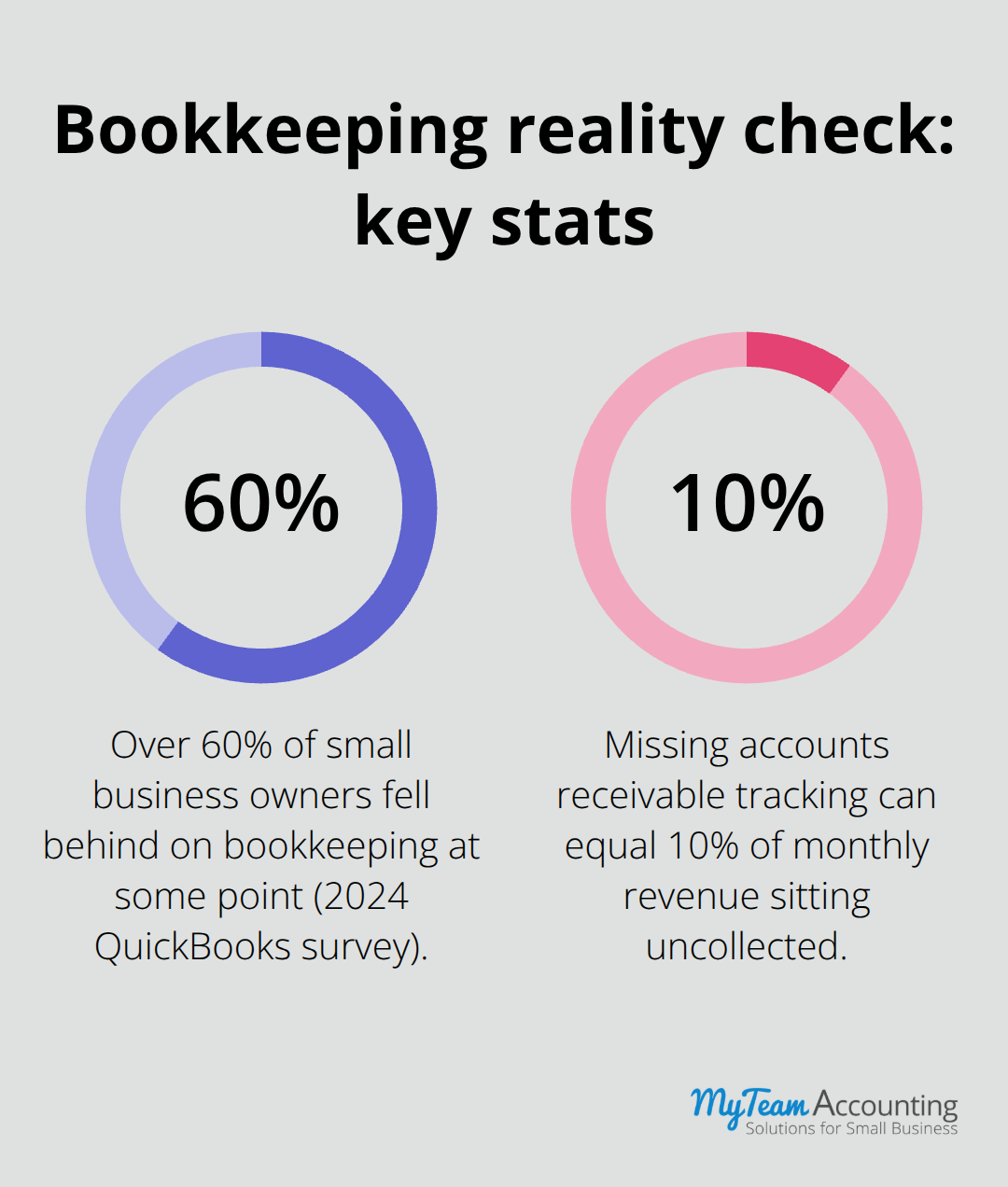
The first step toward fixing messy bookkeeping isn’t making a plan-it’s diagnosing the actual damage. Most business owners discover problems only when tax season arrives or a lender requests financials, at which point damage control costs far more than prevention. A 2024 QuickBooks survey found that over 60% of small business owners fell behind on bookkeeping at some point, yet most never conduct a formal assessment of what went wrong.
Start by pulling your most recent profit and loss statement and bank reconciliation. If either is more than 30 days old, your financial decisions rest on stale data. Next, export your transaction list from the past three months and scan for patterns: uncategorized entries, duplicate charges, personal expenses mixed with business spending, or transactions assigned to vague catch-all accounts. These aren’t minor housekeeping issues-they directly inflate your tax preparation fees. Disorganized records lead to higher tax preparation costs, meaning a messy chart of accounts costs you real money every filing season.
Identify Red Flags That Demand Action
Look for warning signs that demand immediate attention: bank reconciliations months overdue, accounts receivable treated as a mystery rather than tracked invoices, vendor payments frequently late, and a growing backlog of uncategorized transactions. If personal and business expenses are commingled in your accounts, your financial picture is fundamentally unreliable. These red flags reveal where your systems broke down and what needs priority.
Prioritize Issues by True Impact
Not all bookkeeping problems carry equal weight. A single misclassified transaction matters far less than a three-month bank reconciliation gap. Start by listing every issue you’ve identified and assign a severity level based on impact to tax filing, cash flow visibility, and compliance. Missing payroll tax documentation ranks higher than a misfiled office supply expense. Overdue accounts receivable directly affects cash on hand and must be addressed before routine categorization work.
If you’re using multiple accounting systems or spreadsheets running parallel to your main software, that integration gap is your highest priority because it creates duplicate work and error opportunities. Document your current processes next-not as they should work, but as they actually function. Who enters the transactions? When do bank reconciliations happen? What’s your chart of accounts structure, and does it reflect how your business actually earns and spends money?
Prepare Your Team and Systems
Grant your bookkeeper or accountant view-only access to bank and credit card accounts early so they can verify transactions without security concerns and identify discrepancies faster. Provide a clear, up-to-date chart of accounts and gather recent bank statements and reconciliations to confirm your books match actual balances. The assessment phase determines whether cleanup takes weeks or months-rushing past it guarantees rework later. With your diagnosis complete and priorities set, you’re ready to build a cleanup strategy that targets the highest-impact problems first.
Building Your Cleanup Strategy
Your diagnosis revealed the damage, but now you need a battle plan that actually works. The worst cleanup strategies treat all problems equally, which stretches timelines and wastes resources on low-impact fixes while critical issues linger. Start instead with brutal honesty about which problems directly threaten your tax filing, cash flow visibility, or compliance standing. A bank reconciliation gap costs far more to fix later than a misclassified office supply expense, so tackle reconciliation first even if it feels less urgent.
Quantify Your Problems and Prioritize Ruthlessly
Assign a dollar impact estimate to each problem: missing accounts receivable tracking might represent 10% of your monthly revenue sitting uncollected, while a messy chart of accounts might add 15–20% to your annual tax preparation fees. This forces you to stop treating bookkeeping as a single amorphous mess and instead identify which specific fixes generate the highest return on your cleanup effort. A reconciliation gap demands immediate attention because it creates cascading errors in cash flow analysis. Commingled personal and business expenses rank second because they distort your true profitability and inflate tax preparation costs. Missing payroll documentation ranks third because it creates compliance risk, though it typically requires less time to resolve than reconciliation work.
Set Realistic Timelines Based on Actual Scope
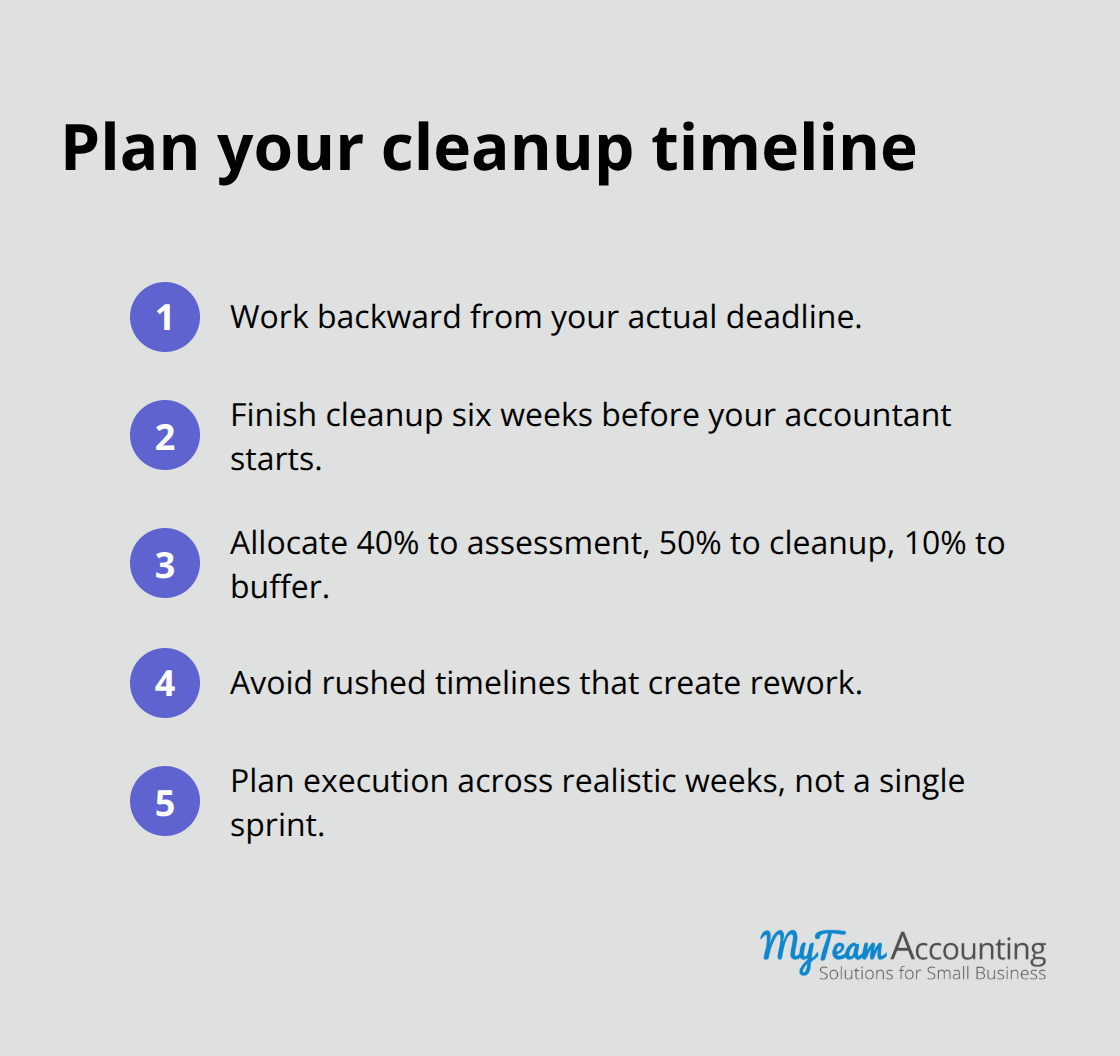
Your timeline depends entirely on severity and available resources. A business with a one-month reconciliation gap and clean categorization can finish cleanup in two to three weeks of focused work. A practice with a six-month backlog, commingled personal and business expenses, and missing payroll documentation needs eight to twelve weeks minimum, often longer if historical data requires reconstruction. Avoid the trap of setting aggressive timelines to feel productive-cleanup rushed creates rework later. Instead, work backward from your actual deadline. If tax season arrives in four months, you need cleanup finished six weeks before your accountant starts work, which means you have ten weeks to execute. Allocate roughly 40% of that time to assessment and planning, 50% to the actual cleanup work, and 10% as buffer for discoveries and complications that always emerge once you dig deeper into the records.
Choose Your Resource Model and Control Costs
Your resource allocation determines whether cleanup succeeds or stalls. If you handle cleanup yourself while running daily operations, assign specific days rather than spare hours-four focused mornings per week beats squeezing thirty minutes here and there. If you outsource to a bookkeeper or accountant, the cost structure matters significantly. Hourly cleanup rates vary per hour depending on market and expertise, but hourly work often extends longer than flat-fee projects because the incentive structure rewards slow, methodical work over efficient completion. Many experienced bookkeepers instead quote fixed fees based on months of backlog, severity assessment, and account complexity, which means you know the total cost upfront and the provider is motivated to finish faster.
Define Scope and Secure Full Access
Whatever approach you choose, grant full access to your accounting software, bank accounts, and transaction records from day one-delayed access creates bottlenecks that extend your timeline and inflate costs. Document exactly what cleanup includes: Which months get reconciled? Does historical data get reconstructed or left as-is? Are payroll taxes verified and corrected? Does the cleanup include tax position review or just transaction organization? Vague scope creep turns a three-week project into an eight-week nightmare. Finally, build in a two-week buffer between cleanup completion and your actual deadline, whether that’s tax filing, a loan application, or financial review. This protects you if discrepancies emerge during final verification and ensures your books are genuinely ready rather than just declared ready.
With your strategy locked in place and resources allocated, you now move into the execution phase where you actually transform your messy records into reliable financial data.
Executing Your Cleanup
Reconcile Bank Accounts First
Start with bank reconciliation because nothing else matters until your records match your actual cash position. Open your accounting software and pull the oldest unreconciled month, then download the corresponding bank statement. Compare every transaction line-by-line: deposits must match invoice payments and revenue entries, withdrawals must align with vendor payments and payroll. Most businesses discover that bank fees went unrecorded, transfers between accounts created duplicates, or timing differences between when checks cleared and when you entered them created artificial gaps.
Reconciliation gaps compound monthly, so a three-month backlog takes roughly nine times longer to fix than a single month. Start with the oldest month and move forward chronologically rather than jumping to recent months-this prevents you from chasing your tail when old transactions suddenly appear in new statements. Flag every discrepancy in a spreadsheet with three columns: transaction date, description, and required action. Do not assume small differences will resolve themselves. A $47 difference today becomes a $47 error in your cash flow analysis and tax records forever unless you investigate and correct it now.
Most reconciliation work takes four to six hours per month for businesses with fifty to one hundred monthly transactions, so a six-month backlog demands twenty-four to thirty-six hours of focused work. Allocate this across two to three weeks rather than cramming it into one chaotic sprint.
Rebuild Your Chart of Accounts
Once reconciliation confirms your cash position is accurate, rebuild your chart of accounts to match how your business actually operates. Pull a full transaction export from the past six months and categorize each entry by business function: revenue streams, cost of goods sold, operating expenses, payroll, taxes, and debt service. Your current chart likely contains vague categories like Miscellaneous, Office Expense, or Other Income that obscure your true financial picture. Replace these with specific accounts that reflect your actual spending patterns.
If you operate a service business, you need separate accounts for subcontractor costs, equipment, software subscriptions, and client reimbursables rather than lumping everything under Contractor Expense. If you run a retail operation, merchandise inventory must be separate from supplies, and cost of goods sold must exclude operating overhead. This restructuring typically requires four to eight hours to plan and execute, but the payoff is immediate: your profit and loss statement suddenly tells a coherent story rather than hiding critical information in catch-all buckets.
Reclassify Historical Transactions
After restructuring, move all historical transactions from vague accounts into their proper homes. This work is tedious but non-negotiable-a business owner cannot make sound pricing or hiring decisions if they cannot see true cost of goods sold or actual labor expenses. You must complete this step to ensure your financial reports reflect reality rather than organizational chaos.
Recover Hidden Money in Receivables and Payables
Finally, review accounts receivable and payable balances because these often hide significant money. Export your aged receivables report and identify invoices overdue by more than thirty days. Contact clients directly rather than waiting for payment reminders-many overdue balances result from lost invoices or billing disputes that resolve in one conversation. Similarly, review accounts payable to confirm you have not paid duplicate invoices or missed early-payment discounts that could have saved cash. These hidden money moves often recover five to fifteen percent of total cleanup time investment in the form of recovered cash or avoided overpayments.
Final Thoughts
A structured bookkeeping cleanup plan transforms financial chaos into actionable clarity, but the real work begins after cleanup ends. Your reconciled accounts, rebuilt chart of accounts, and recovered receivables represent a snapshot in time, not a permanent solution. The businesses that stay clean enforce discipline in their daily processes rather than waiting for the next crisis to force another cleanup. Accurate financial reports reflect your true profitability, tax preparation costs less because your records stay organized, and cash flow visibility lets you make confident decisions about hiring, pricing, and growth.
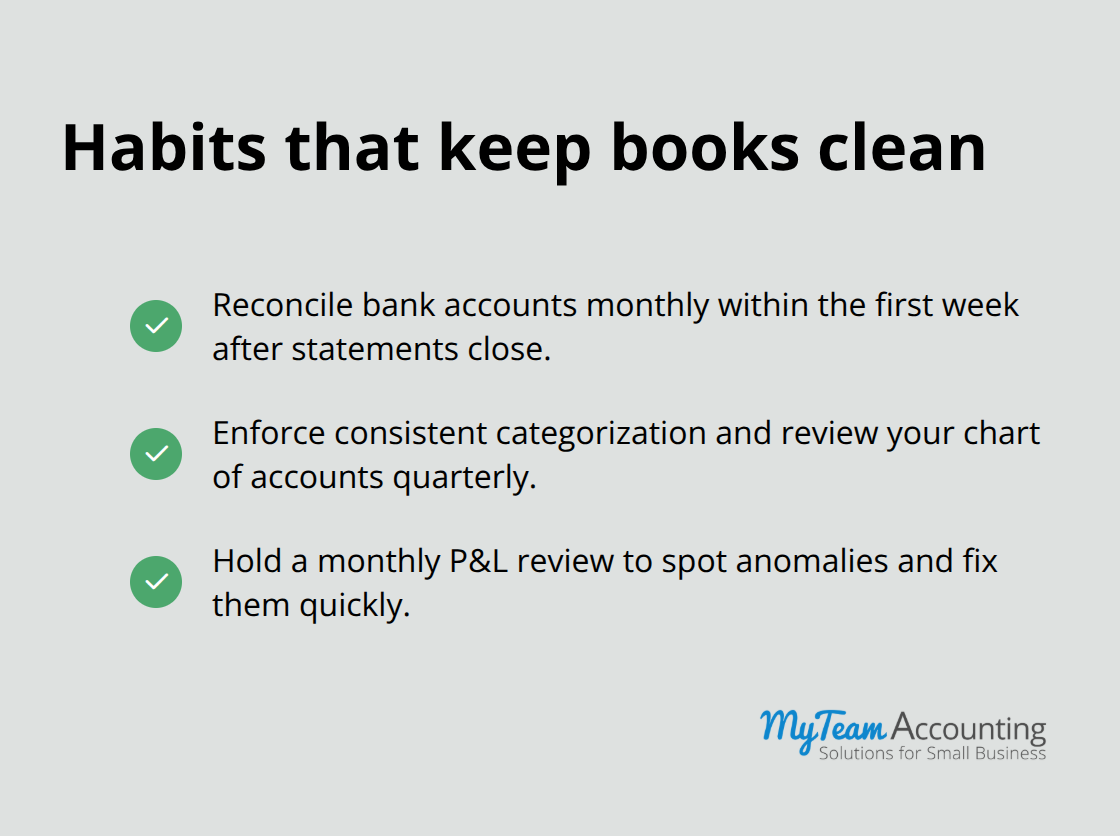
Clean books build credibility with lenders, investors, and your own team because your accountant can pull a profit and loss statement without spending hours hunting for missing transactions. You pay less in professional fees and receive faster answers to critical business questions when your records stay current. Maintaining clean books requires three ongoing habits: reconcile your bank accounts monthly without fail (ideally within the first week after statements close), enforce consistent transaction categorization by reviewing your chart of accounts quarterly, and schedule a brief financial review each month where you scan your profit and loss statement for anomalies and address them immediately.
If you find yourself slipping back into old patterns, that signals you need either better systems or external accountability. Many businesses benefit from monthly bookkeeper check-ins or automated tools that flag uncategorized transactions before they pile up. The cost of prevention always stays lower than the cost of another major cleanup, so invest in the systems and support that keep your books clean.