

Why Custom Training in QuickBooks or Xero Can Transform Your Business
Many small business owners invest in QuickBooks or Xero but never unlock their full potential. Without proper guidance, these powerful tools become sources of frustration rather than competitive advantages.
Custom training transforms how you use accounting software. Whether you need QuickBooks training, Xero training, or broader finance training, tailored instruction addresses your specific challenges and eliminates costly mistakes.
The right software support and training partnership delivers measurable results: faster month-end closes, clearer financial insights, and fewer compliance headaches. This guide shows you exactly how.
Where Your Software Investment Goes Wrong
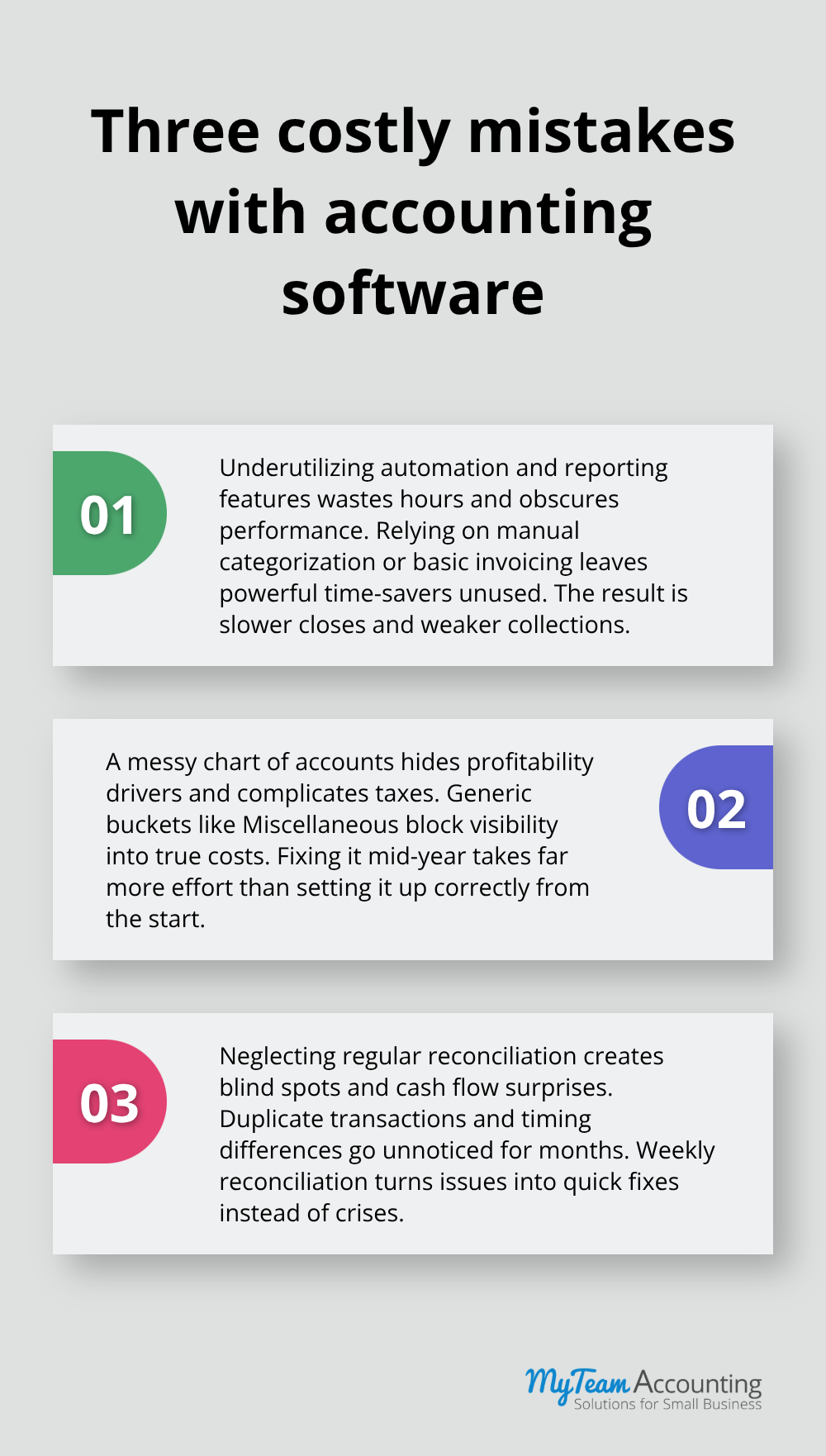
Most business owners purchase QuickBooks and Xero but treat them as invoicing and expense-tracking tools, completely ignoring the automation and reporting capabilities that justify the software cost. You might spend thirty minutes manually categorizing expenses each week when the software can do it automatically with predefined rules. Bank reconciliation becomes a dreaded monthly chore instead of a five-minute task. Invoices leave your business without payment links or branding, reducing collection rates and making your operation look unprofessional.
The Hidden Cost of Messy Chart of Accounts
A disorganized chart of accounts destroys your ability to understand profitability and cash flow. You might dump all expenses into a generic Miscellaneous category, making tax time chaotic and preventing you from identifying where money actually goes. Construction businesses mix project costs with overhead expenses and can’t determine which jobs are profitable. Service businesses lack proper client or project tracking and can’t calculate true costs per engagement. Xero and QuickBooks offer custom chart of accounts setup that segments revenue and expenses precisely for your industry, but most owners accept default settings and pay the price in confusion and missed optimization opportunities. When you finally need financial data for a loan application or strategic decision, you discover your numbers are unreliable and incomplete. Fixing a messy chart of accounts mid-year requires exponentially more effort than setting it up correctly from the start.
Reconciliation Neglect Creates Blind Spots
Skipping or delaying bank reconciliation transforms small problems into big disasters. You believe your QuickBooks balance matches your bank balance, but duplicate entries, timing differences, or unrecorded transactions create a gap nobody notices until cash flow problems emerge. Xero’s real-time bank feeds eliminate manual data entry and catch discrepancies immediately, yet you must actually use the reconciliation feature consistently-not quarterly when panic sets in. A business owner who reconciles weekly catches fraud, duplicate charges, and missing transactions within days rather than discovering them months later. The discipline of regular reconciliation also reveals spending patterns and cash flow trends that inform better decisions about payroll timing, vendor terms, and growth investments. Automation exists in both platforms to make this painless, yet many users treat reconciliation as optional busywork rather than the financial health check it actually is.
Why Knowledge Gaps Lead to Costly Mistakes
These three mistakes-underutilizing features, maintaining a disorganized chart of accounts, and neglecting reconciliation-share a common root: insufficient training and guidance. Software vendors design their platforms with powerful capabilities, but they assume users understand accounting fundamentals and best practices. Most small business owners lack formal accounting training and learn through trial and error, discovering too late that their approach creates problems. The cost compounds over time through wasted hours, tax complications, missed deductions, and decisions made on faulty financial data. What separates thriving businesses from struggling ones isn’t the software they choose-it’s how effectively they implement and use it. The next section reveals how custom training addresses each of these pain points and delivers measurable results.
How Training Fixes What Software Alone Cannot
Custom training works because it diagnoses your specific situation and builds solutions around it, rather than forcing you into a generic learning path. A construction company needs entirely different QuickBooks setup than a SaaS business, yet most training assumes everyone operates the same way. Effective training starts with understanding your revenue model, expense structure, team size, and current pain points. If you invoice clients monthly but struggle with cash flow visibility, training focuses on cash flow forecasting and aging reports rather than inventory management. If your chart of accounts is already damaged, training shows you how to reorganize it without losing historical data or complicating tax preparation. If your team enters expenses inconsistently, training establishes rules and automation that enforce consistency automatically. This targeted approach means you spend time on what actually matters to your business instead of learning features you’ll never use. The trainer identifies which automation features address your biggest time-wasters and builds confidence through real transactions from your actual business, not hypothetical examples that feel disconnected from reality.
Practice with Your Real Numbers Changes Everything
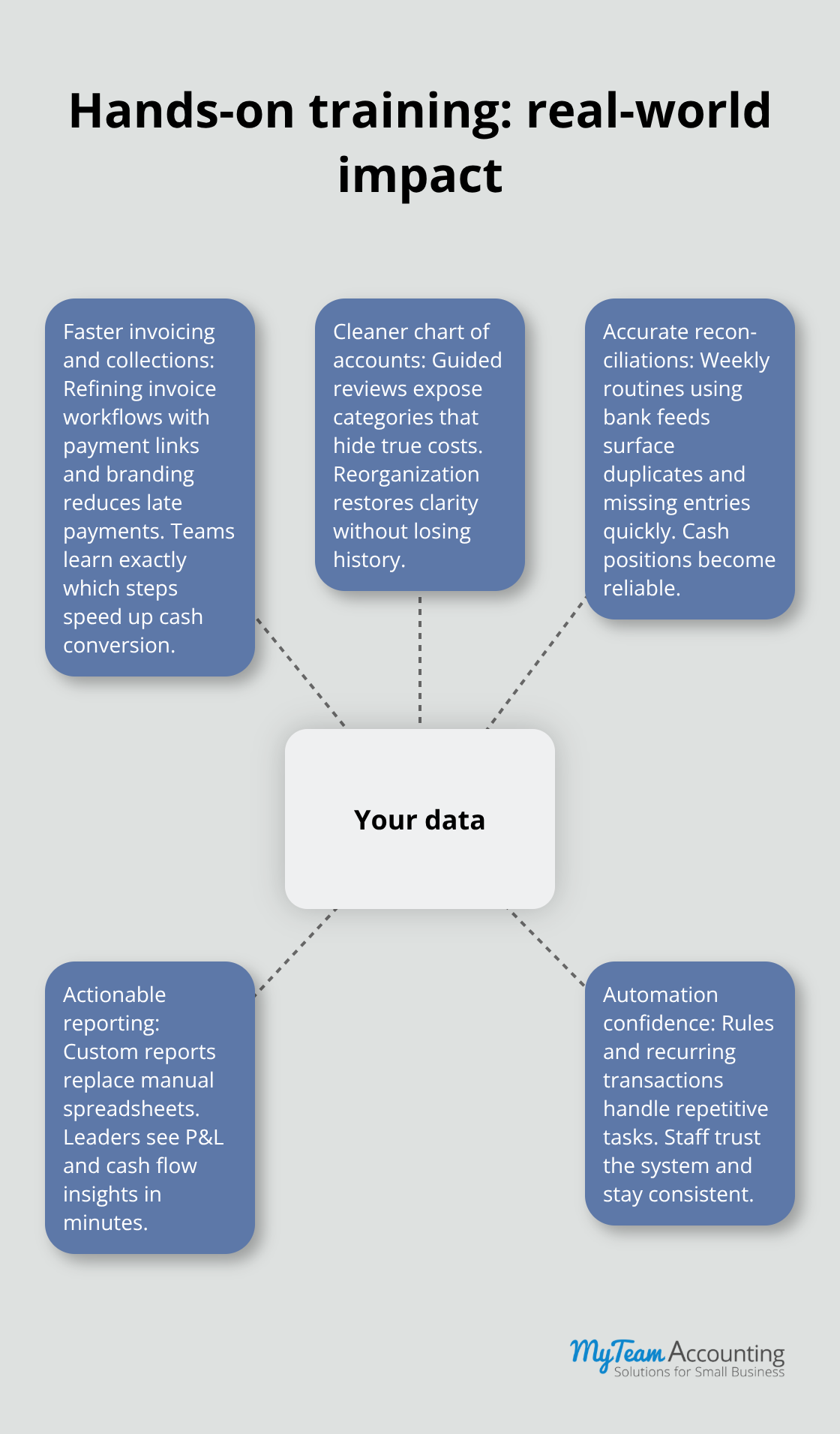
Hands-on training using your actual data transforms abstract concepts into concrete understanding. Generic training teaches you how to create an invoice in QuickBooks; training with your data teaches you why your invoicing process costs you money through late payments. When a trainer walks through your existing chart of accounts and shows you specifically which expense categories are costing you visibility, you see the problem immediately and understand the solution. When reconciliation training uses your actual bank feeds and transactions, you discover duplicate entries or missing payments that have been hiding in your system for months. This immediate, tangible value creates momentum and motivation that distant theory cannot match. Many business owners resist accounting training because they expect boring lectures about debit and credit; hands-on training with real scenarios proves training solves problems you face daily.
Ongoing Support Prevents Backward Slides
The biggest training mistake is treating it as a one-time event rather than the beginning of a relationship. You attend training, feel energized, implement changes, and then six months later you’ve drifted back to old habits because nobody held you accountable. Effective training partnerships include follow-up sessions, quick-reference guides for your specific setup, and access to experts when you hit snags during month-end close or tax preparation. When your team member creates an invoice incorrectly, they know exactly who to contact and receive correction within hours rather than discovering the mistake during reconciliation. When you want to set up a new tracking category or modify your chart of accounts, you have guidance instead of guessing and potentially creating problems. Training providers often offer quarterly check-ins to review your financial reports, spot trends, and suggest process improvements as your business evolves. This ongoing relationship means your accounting system grows with you rather than becoming outdated and inefficient as your business scales. Access to expert resources also means you catch tax planning opportunities before year-end instead of discovering missed deductions after tax season closes. The cost of ongoing support remains minimal compared to the value of maintaining clean systems, avoiding compliance mistakes, and making financial decisions based on accurate, timely data. The next section reveals exactly what measurable results you can expect when you implement proper training and maintain these systems consistently.
Measurable Results from Implementing Proper Training
Proper training delivers concrete, measurable outcomes within weeks, not months. A business owner who completes hands-on QuickBooks training typically reduces monthly bookkeeping time from eight to ten hours down to two to three hours. Automation features like bank feed categorization and recurring transactions eliminate repetitive manual work. Construction companies that implement proper chart of accounts setup and job tracking complete month-end close in five days instead of fifteen. Xero users who learn to build custom reports stop manually compiling spreadsheets and instead generate P&L statements, cash flow forecasts, and profitability analysis in minutes. The time savings compound throughout the year, freeing you and your team to focus on revenue-generating activities rather than administrative busywork. More importantly, the speed gains mean you have financial data available faster, enabling quicker decisions about cash flow management, expense control, and growth investments.
Financial Visibility Transforms Decision-Making
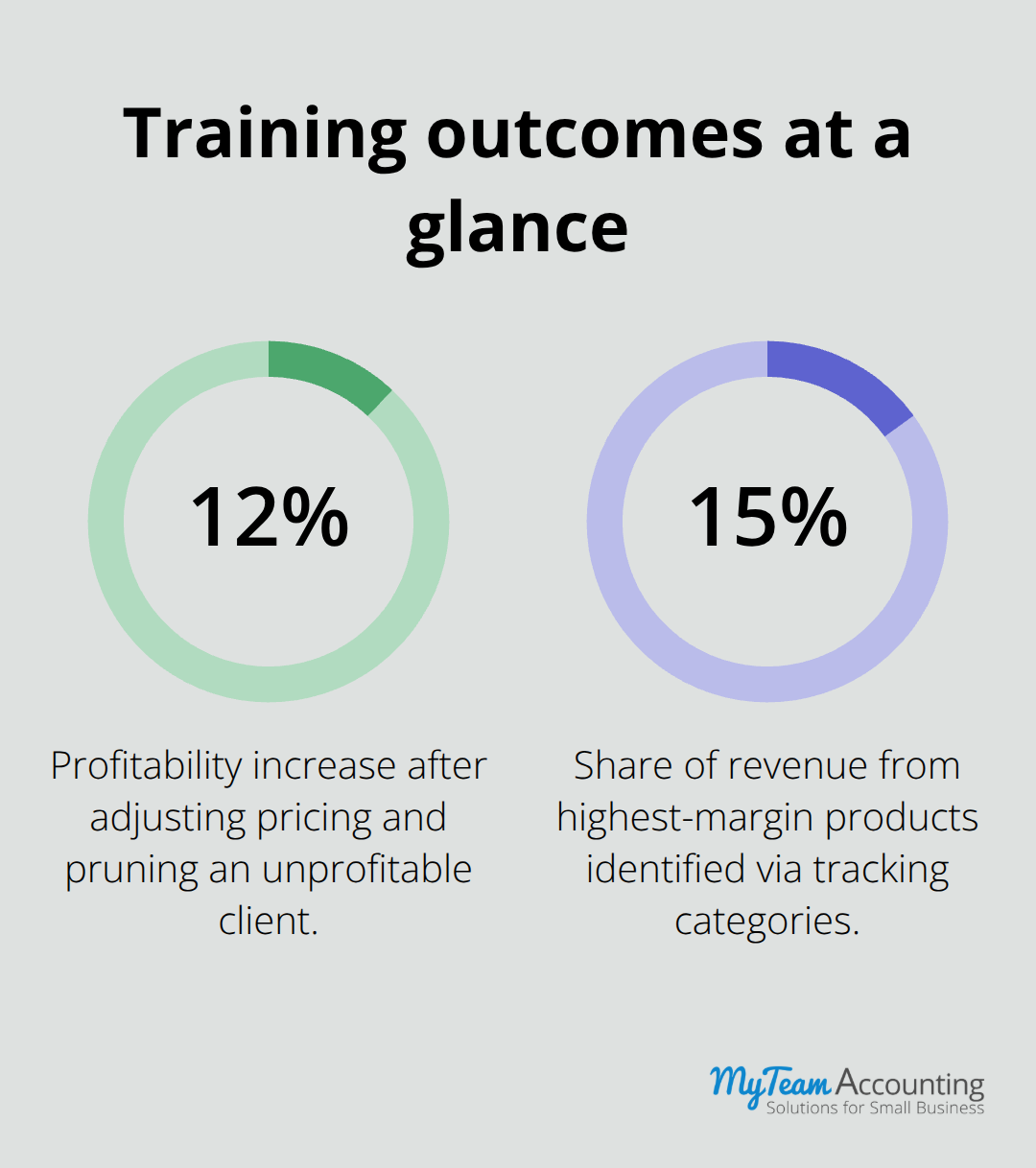
Financial visibility improves dramatically once you understand your actual numbers. A service business that reorganizes its chart of accounts discovers that three clients actually lose money when you factor in true labor costs and overhead allocation. Previously, they appeared profitable because expenses were lumped into generic categories that obscured reality. Within one month of implementing proper tracking, the owner adjusts pricing for two clients and terminates the unprofitable engagement, increasing overall profitability by twelve percent. A SaaS company learns through cash flow forecasting that they consistently run short of cash in month two of each quarter due to payment timing mismatches, allowing them to negotiate better vendor terms and adjust payroll timing.
Errors and Compliance Problems Disappear
Errors and compliance problems disappear when systems enforce consistency. Regular reconciliation catches fraud and duplicate transactions immediately rather than allowing problems to compound. A business owner discovered an employee who had created duplicate invoices to customers over six months, inflating revenue by nearly twenty thousand dollars and causing accounts receivable aging to be completely unreliable. Because reconciliation had been neglected, the problem went undetected for half a year. After implementing weekly reconciliation discipline, similar issues surface within days. Tax preparation becomes straightforward when your chart of accounts is organized properly and reconciliation has been consistent throughout the year. You know exactly which expenses are deductible, depreciation has been tracked accurately, and the IRS documentation is complete. Payroll compliance improves when training teaches your team the correct way to categorize payroll expenses and benefits in both QuickBooks and Xero, preventing the classification errors that trigger audit flags. Year-end tax filing costs drop significantly because your accountant spends time on strategy rather than reconstructing messy records or fixing categorization mistakes. One business owner reported reducing their accountant’s year-end review time from forty hours to twelve hours after proper training cleaned up their system, saving over three thousand dollars annually. These compliance wins extend beyond taxes-proper setup prevents missed deadlines, incorrect filings, and the stress of scrambling during audit periods.
Final Thoughts
Custom training in QuickBooks or Xero addresses the root cause of financial management struggles: knowledge gaps that prevent you from using powerful tools effectively. Businesses that invest in tailored software support reduce monthly bookkeeping time by sixty to seventy percent, gain accurate financial visibility within weeks, and eliminate compliance errors that cost thousands in accountant fees and audit risk. These results emerge from training that diagnoses your specific situation and builds solutions around your actual business model, revenue structure, and pain points.
Choosing the right training partner matters more than the software itself. Look for providers who offer hands-on practice with your real data rather than generic examples, understand your industry’s unique accounting needs, and provide ongoing support beyond the initial session (the best partners ask detailed questions about your current challenges before designing curriculum and assign trainers with experience in your business type). Avoid one-time training events that leave you without support when questions arise during month-end close or tax preparation. Instead, seek partners who position themselves as extensions of your team and remain accessible when you need guidance.
Schedule a discovery conversation with a training provider who specializes in QuickBooks training or Xero training aligned with your business needs. Describe your biggest accounting frustrations-whether that’s cash flow visibility, time spent on manual tasks, or confusion about profitability-and ask how they would customize their approach to address those specific challenges. The investment in custom training pays for itself within months through time savings, error reduction, and better financial decisions.