

7 Ways an Outsourced CFO Can Help You Scale with Confidence
Growing a business demands financial clarity, yet many entrepreneurs struggle with outdated systems and overwhelming administrative tasks. An outsourced CFO provides the strategic financial leadership you need without the expense of a full-time hire.
This partnership transforms how you manage cash flow, compliance, and growth decisions. Discover how virtual CFO services unlock competitive advantages and remove accounting as a barrier to scaling your business.
1. Gain Real-Time Financial Visibility
Most business owners check their finances monthly or quarterly, relying on stale data to make critical decisions. An outsourced CFO transforms this approach by implementing systems that surface your cash position, profitability, and key metrics daily or weekly. This speed matters because market conditions shift faster than traditional reporting cycles, and delayed financial information costs you opportunities and competitive ground. When you spot that a product line underperforms or a customer segment strains cash flow in real time, you adjust pricing, cut expenses, or shift resources immediately rather than discovering the problem three months later in a financial statement.
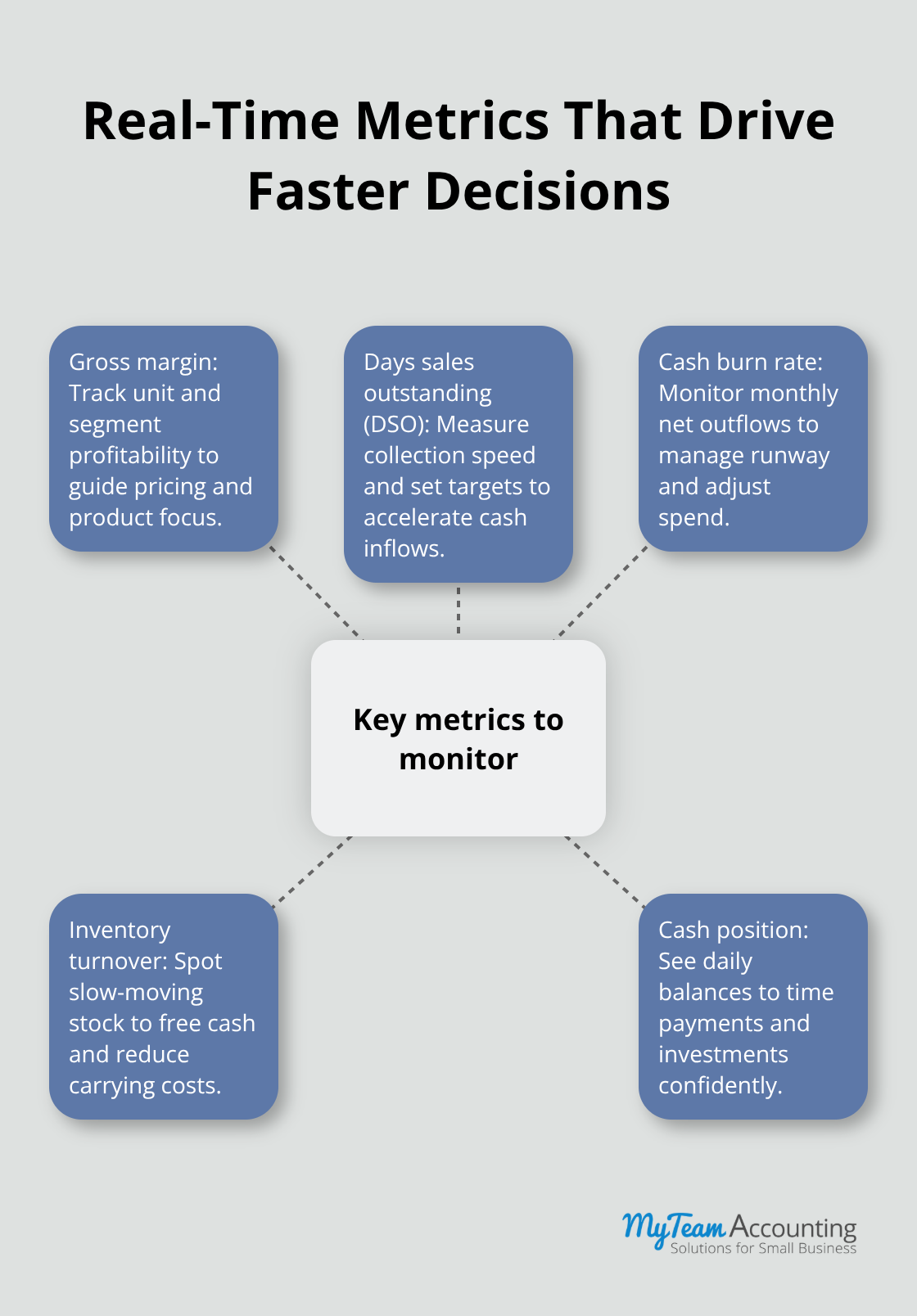
The competitive advantage emerges because most small businesses operate without clear financial visibility. Your outsourced CFO identifies which metrics matter for your industry and business model, then builds visibility around those numbers so you make faster, smarter decisions than competitors still wrestling with incomplete financial pictures. Forecasting becomes proactive rather than reactive when you understand cash flow patterns weeks in advance, spot seasonal dips before they create strain, and identify which customers or contracts drive real profitability. This visibility also strengthens conversations with lenders and investors because you can articulate exactly how your business performs and where capital flows. Real-time financial clarity removes guesswork from growth decisions and positions your business to capitalize on opportunities the moment they appear, setting the stage for the operational efficiency gains that come when you eliminate routine accounting tasks entirely.
2. Eliminate Bookkeeping and Payroll Headaches
An outsourced CFO handles payroll processing, tax deposits, and regulatory filings so you avoid costly errors entirely while your team focuses on revenue-generating work. Bookkeeping-the daily recording of transactions, bank reconciliation, and account management-consumes roughly 40 to 60 hours monthly for most growing businesses, time that could instead drive sales, product development, or customer relationships. When you delegate these tasks to a CFO service experienced with QuickBooks Online or Xero, your internal staff reclaims that capacity to work on what actually moves your business forward.
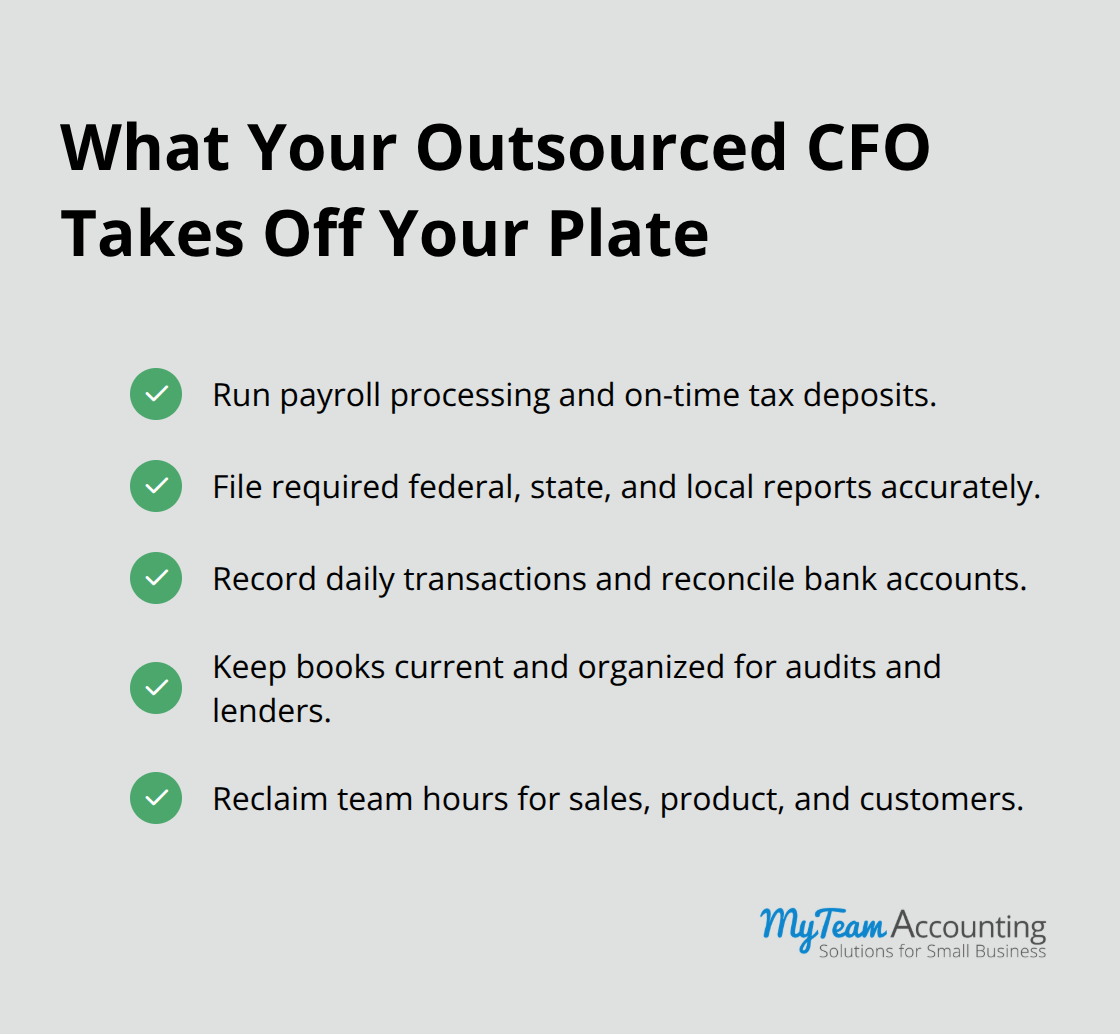
Payroll compliance varies by state, with some requiring quarterly reporting, others demanding monthly filings, and many imposing strict wage and hour rules that trigger audits when mishandled. An outsourced CFO stays current with these regulations, adjusts withholdings correctly, and files on time so you sidestep the administrative burden and reputational damage of late or incorrect submissions. A CFO service integrates your payroll data into your broader financial picture, showing you exactly how labor costs impact cash flow, profitability, and growth capacity. This visibility reveals whether your payroll structure aligns with revenue or if you’re overstaffed relative to current income-insights most business owners never see because payroll sits isolated in a separate system. With bookkeeping and payroll handled by experts, you transform these necessary but draining tasks into reliable, compliant processes that free your attention for strategy, growth, and the cash flow optimization that comes next.
3. Optimize Cash Flow and Prevent Cash Crunches
cash flow forecasting separates businesses that survive downturns from those that spiral into crisis. An outsourced CFO implements rolling 12-month cash forecasts that project your inflows and outflows with enough precision to anticipate demand peaks, seasonal slowdowns, and funding gaps before they threaten operations. Your CFO analyzes historical cash patterns-when customers typically pay, when vendors demand payment, when seasonal revenue dips occur-then models multiple scenarios so you understand what your business can sustain under normal conditions, slow periods, and rapid growth. This approach transforms cash management from reactive scrambling into proactive planning, enabling you to negotiate better payment terms with suppliers, adjust inventory timing to match revenue cycles, and build reserves that absorb unexpected expenses without triggering emergency borrowing.
Most small businesses discover cash problems too late because they confuse profit with cash. A business can be profitable on paper yet run out of cash because customers pay 60 days late while vendors demand payment in 30 days, creating a dangerous timing gap. An outsourced CFO identifies these working capital inefficiencies and recommends concrete actions:
- Tighten collection processes to reduce days sales outstanding
- Move customers to shorter payment terms, such as Net-15 or Net-10, to accelerate cash collection
- Adjust inventory levels to free trapped capital
Scenario analysis further strengthens your confidence by showing how different growth paths-launching a new product, expanding geographically, or taking on a major contract-impact your cash position month by month. This visibility eliminates the fear that expansion will drain resources, instead revealing exactly how much capital you need and when you need it. Understanding your cash runway with precision allows you to pursue growth opportunities with certainty, positioning you to access strategic financial advisory that guides pricing, profitability, and competitive positioning.
4. Access Strategic Financial Advisory Without Hiring
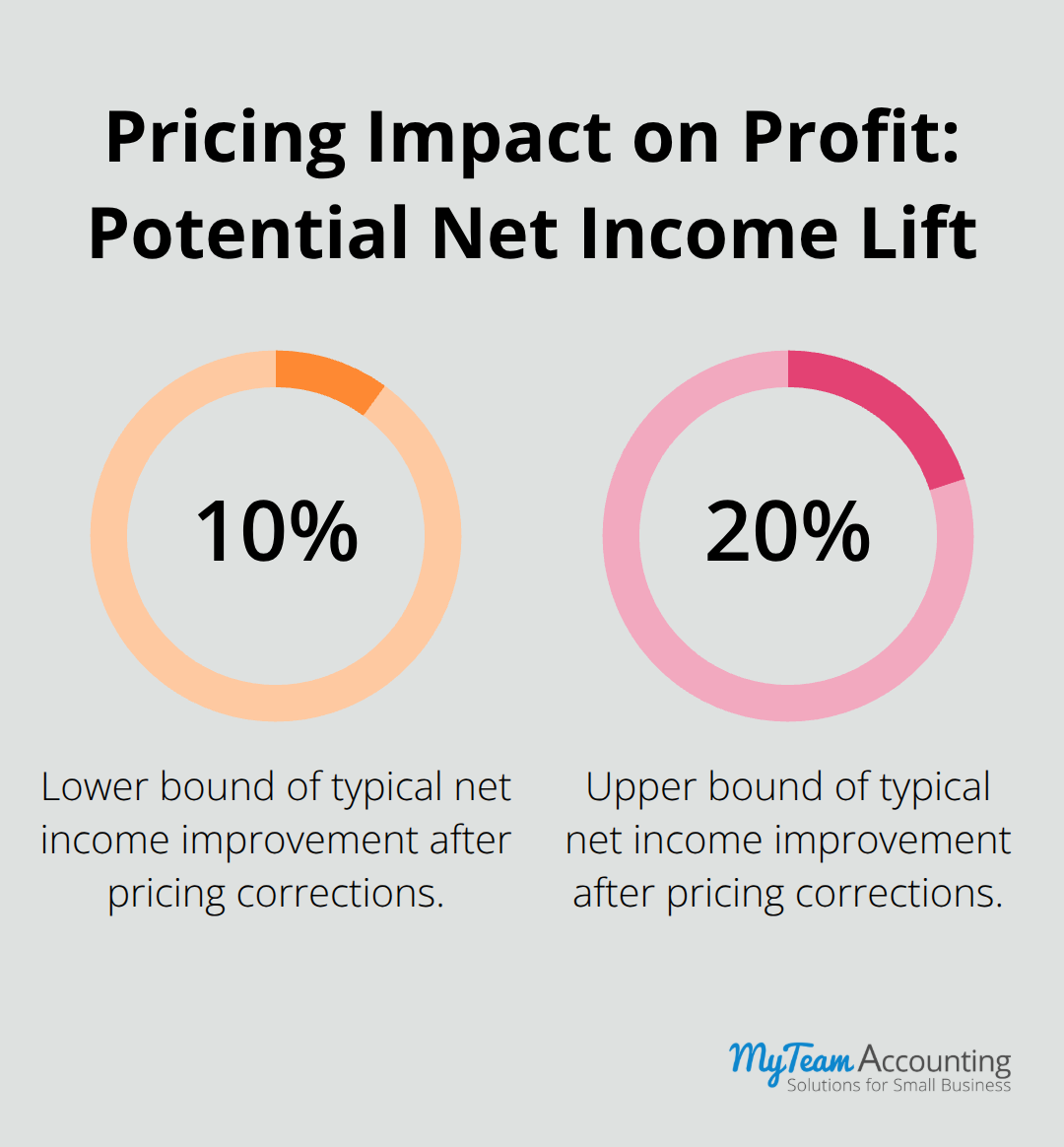
A full-time CFO costs significantly more than outsourced alternatives, with compensation packages ranging from $350,000 to $500,000 annually when including salary, benefits, taxes, and overhead. An outsourced CFO delivers the same caliber of strategic guidance-pricing analysis to identify profit optimization, profitability modeling, growth planning-at a fraction of that cost, typically ranging from $2,000 to $10,000 monthly depending on complexity and engagement depth. This flexibility means you access CFO-level expertise exactly when you need it without long-term payroll commitments. Your outsourced CFO examines your gross margin by product line or customer segment, identifies which offerings truly drive profit, and recommends price increases on high-demand services where you’re leaving money on the table. Most business owners underprice their work because they lack the financial visibility to understand true profitability; a CFO service quantifies the real cost of delivery and reveals pricing gaps that, when corrected, often improve net income by 10 to 20 percent without scaling revenue.
An outsourced CFO benchmarks your performance against industry standards so you understand whether your operating expenses, inventory turnover, or customer acquisition costs place you ahead or behind competitors. This benchmarking clarifies whether your growth strategy aligns with what’s sustainable in your sector or if you’re pursuing expansion that will drain cash faster than revenue grows. Your CFO models different growth scenarios-launching a new product line, entering a new geographic market, or acquiring a competitor-showing you the capital required, the timeline to profitability, and the cash runway needed to survive the investment phase. These insights transform finance from a compliance function into a competitive weapon, enabling you to make expansion decisions with confidence rather than hope. With strategic advisory in place, you’re ready to master the accounting systems that support this growth trajectory.
5. Master Your Accounting Systems
Your accounting platform forms the foundation for every financial decision your business makes, yet most growing companies operate with outdated, disorganized books that create bottlenecks rather than clarity. QuickBooks Online and Xero dominate small business accounting for good reason, but choosing between them depends on your specific needs. QuickBooks Online excels for US-focused businesses needing integrated payroll and deep customization through app integrations, though it demands a steeper learning curve. Xero shines if you operate internationally, need unlimited user access across all pricing tiers, or prefer a cleaner interface that feels more intuitive to non-accountants. An outsourced CFO assesses your current platform, industry requirements, and growth trajectory to recommend the right fit rather than forcing you into a one-size-fits-all solution.
Messy financial records destroy decision-making speed and cost you thousands in tax optimization, missed deductions, and audit risk. An outsourced CFO conducts a comprehensive system cleanup, reconciling months or years of unmatched transactions, correcting misclassified expenses, and establishing chart-of-accounts structures that determine how expenses appear at tax time. This foundation enables accurate profitability reporting by product line, customer segment, or location so you understand where your business truly makes money. Once your books are clean, your CFO implements processes and automation that scale with your business, reducing manual data entry, automating recurring transactions, and establishing monthly close procedures that deliver financial statements within days rather than weeks. With your accounting systems optimized and your financial records accurate, you gain the compliance foundation and risk controls that protect your business as you expand.
6. Ensure Compliance and Reduce Risk
Tax regulations shift constantly, and missing a filing deadline or misclassifying an expense triggers penalties that drain thousands from your bottom line. An outsourced CFO stays current with federal, state, and local tax changes so your business operates within the law without you monitoring regulatory updates yourself. Most small business owners discover compliance gaps during an audit, when the damage is already done and correcting years of errors becomes expensive and time-consuming. Your CFO implements controls that prevent problems before they occur: proper payroll withholding calculations, accurate sales tax collection and remittance, and timely estimated tax payments that avoid underpayment penalties. According to the Association of Certified Fraud Examiners, organizations with fewer than 100 employees experience significant fraud losses, often because weak internal controls fail to catch unauthorized transactions or duplicate payments.
An outsourced CFO establishes segregation of duties so no single person controls both payment authorization and execution, implements reconciliation procedures that surface discrepancies immediately, and maintains documentation standards that protect you during audits. Documentation creates the difference between a smooth audit and a nightmare scenario where you scramble to reconstruct transactions from email and receipts scattered across multiple sources. Your CFO organizes financial records in a centralized system, maintains supporting documentation for every deduction, and ensures your books align with your tax returns so auditors find no discrepancies. When lenders or investors request financial statements, proper controls and clean records demonstrate that your numbers are reliable and your business operates with integrity. This foundation of compliance and risk management positions you to scale with confidence, knowing your financial structure can withstand external scrutiny while you pursue the growth investments that come next.
7. Scale Your Business Without Financial Constraints
Most growing businesses hit an invisible ceiling where accounting complexity becomes the primary constraint on expansion. An outsourced CFO eliminates this bottleneck by establishing financial infrastructure that grows with you, starting with precise understanding of your unit economics and cash runway. Your CFO calculates exactly how much capital each growth initiative requires, how long until it generates positive cash flow, and what runway you need to survive the investment phase without triggering a crisis. This clarity transforms expansion from a gamble into a calculated decision where you understand the financial mechanics before committing resources. When you know that launching a new product line requires specific planning around cash flow timing, you can plan accordingly rather than discovering the problem mid-launch when capital dries up.
Your outsourced CFO builds a financial model for revenue levels and working capital needs, revealing the exact relationship between growth rate, working capital requirements, and profitability. This prevents the common trap where rapid revenue growth paradoxically destroys cash flow because inventory, receivables, and operational expenses scale faster than customers pay. An outsourced CFO implements the processes, systems, and controls that allow you to scale operations without proportionally increasing accounting overhead, meaning your finance function stays lean while your business grows. Most critically, your CFO ensures lenders and investors see a business that operates with financial discipline and clarity, dramatically improving your ability to secure capital on favorable terms when you need it. With accounting infrastructure optimized and growth constraints removed, you position your business to pursue opportunities at the speed your market demands, setting the stage for the financial transformation that comes when you partner with experienced advisors who understand your industry and growth ambitions.
Final Thoughts
The seven strategies outlined above address the core financial challenges that constrain business growth: visibility, administrative burden, cash management, strategic guidance, system infrastructure, compliance risk, and operational scaling. An outsourced CFO consolidates these capabilities into a single partnership, eliminating the need to hire multiple specialists or build expensive internal teams. The CFO benefits extend far beyond bookkeeping and payroll processing; they reshape how you make decisions, allocate capital, and position your business for competitive advantage.
The return on investment from outsourced CFO services becomes clear when you calculate the cost of your time spent on accounting tasks, the risk exposure from compliance gaps, and the opportunities missed because you lack real-time financial visibility. A virtual CFO typically costs between $2,000 and $10,000 monthly, yet the improvements in cash flow efficiency, tax optimization, and pricing accuracy often generate returns that exceed this investment within the first year. Most importantly, financial leadership from an outsourced partner frees your attention to focus on revenue generation, customer relationships, and strategic initiatives that actually drive business growth.
Your financial foundation determines how fast you can scale without triggering crises. If accounting complexity, cash flow uncertainty, or compliance concerns occupy your attention, a virtual CFO partnership removes these obstacles and positions your business to pursue opportunities at the speed your market demands. Evaluate whether your current financial infrastructure supports your growth ambitions, then take action to strengthen your financial leadership and accelerate growth.